“Money is energy in motion. It’s an emotion.”
— Veronica Dangerfield
How can you and your kids overcome emotional ties to money to learn to use it as a tool?
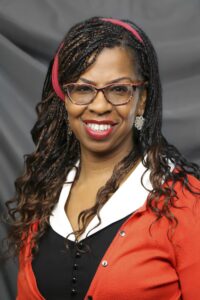
Self-proclaimed “financial cheerleader” Veronica Dangerfield provides you with a pep talk on this episode of The Art of Allowance Podcast. In addition to being an international speaker, a published poet and a professional comedienne, Veronica is an award-winning Financial Educator for Patelco Credit Union. Most notably, she was honored with the 2017 Credit Union Rock Star Award and twice received the national Desjardins Award for her contributions to financial literacy.
A graduate of Sacramento State University, Veronica has also taught financial literacy for 18 years at the college level as well as at dozens of high schools and nonprofit organizations throughout California. And as a philanthropist, she has supported the Bay Area Crisis Nursery for six years as a producer of and performer in the annual Mother’s Day Comedy Show fundraiser.
Links (From the Show)
- Veronica on the Web
- Money-Smart Mentions
- Our Adolescent$ “Good Money Habits” video short featuring a mimic-worthy mantra that Veronica and I discuss: “Pay Yourself First”
- Our compound interest infographic
- Thomas J. Stanley and William D. Danko’s The Millionaire Next Door: The Surprising Secrets of America’s Wealthy
Show Notes (Find what’s most interesting to you!)
- Veronica as a pastry [1:55]
- Veronica’s most surprising financial truth [4:42]
- Why you can’t make good financial decisions if you’re scared [5:50]
- Veronica and I discuss the reality that humans deal with money more emotionally than rationally. [9:17]
- Building good money habits is a long-term commitment. [11:19]
- Veronica advocates for teens’ future selves. [13:44]
- Veronica’s “Five S” method to building wealth [14:49]
- The cooperative spirit: how credit unions are impacting their members’ financial lives for the better [15:51]
- Veronica’s own big money-smart success and big money-smart challenge [20:39]
- The value of modeling, instruction and experience [23:55]
- What should parents know about financial education? [25:40]
- The importance of foundational habits [26:57]
- The media rich versus the real rich [29:58]
- Control your mind to control your money: the importance of daily financial habits [30:30]
- The most influential money figure in Veronica’s life [32:21]
- Financial challenges as inconveniences, not traumas [33:44]
- Investing in travel [34:19]
- Veronica’s financial health message [35:11]
- “You are not your net worth.” [36:24]
- A familiar money-smart book recommendation (And no, Veronica wasn’t bribed!) [37:03]
- How to get the Veronica Dangerfield experience online [38:05]
Click here for the full transcript.
If you liked this episode …
Curious about the “toxic stress” that I mention during my conversation with Veronica? Child psychology researcher Chuck Kalish describes this concept and the dangers it poses to the young brain during his appearance on Art of Allowance Podcast. Tune in at 15:56 for his explanation and analysis.
Interested in how meaningful dinner table conversations and mantra mimicking can play key roles on your family’s money-smart journey? Check out my chat with father and financial advisor Tom Henske. You’ll want to listen in at 4:06 and 27:40 for all the details.
Want to dive deeper into the relationship among modeling, instruction, and experience? I discuss these three financial socialization systems in my short essay, “No Single Point of Failure.” Read it here, or listen to the audio recording.
Please Subscribe
If you like this podcast, then please give us a review and subscribe to the show. The Art of Allowance Podcast is available on iTunes, Spotify, Stitcher, Radio Public and now Amazon Music. Subscribing is free, and it will help me produce more enriching content for you to enjoy. Thanks!
You might also want to check out The Art of Allowance Project, our reimagined program to get your children excited about money smarts at any age. Until next time, I wish you and your family well as you journey forth.
Thanks for listening!
John
Full Transcript
This transcript is from The Art of Allowance Podcast, Episode 61, featuring host John Lanza and guest Veronica Dangerfield.
00:00:00,160 [John Lanza]
Hello and welcome to Episode 61 of The Art of Allowance Podcast.
00:00:07,480 [Veronica Dangerfield]
I think that parents don’t understand the emotional impact of money and how, especially teenagers, the fear of missing out, how wearing the most expensive tennis shoes and having the most, um, the best jacket where everybody else, and the fitting in, um, how significant that is and how that is a good teaching lesson for them. And it’s, and it’s a hard one because when you’re a teenager your whole life is about fitting in.
00:00:39,160 [John Lanza]
[upbeat music] Today I am talking with Veronica Dangerfield. Veronica brings an engaging and thought-provoking enthusiasm to everything she does, including this conversation. She’s a financial educator for Patelco Credit Union, an award-winning international speaker, a published poet, and a professional comedienne. Veronica has won numerous awards, including the 2017 Credit Union Rock Star Award for her contributions to adult financial literacy. She has taught financial literacy for over 18 years at high schools and non-profits and at the college level, including UC Berkeley. Veronica’s mission is really to just make sure that you will remember how much fun you had learning when she is teaching. She arms you with key takeaways to help shift your thinking and impact your financial life. Veronica is also a friend and collaborator, and I am excited for you to enjoy my conversation with Veronica Dangerfield. [upbeat music] Today I am talking with Veronica Dangerfield. Welcome, Veronica.
00:01:51,680 [Veronica Dangerfield]
Hi, John.
00:01:53,640 [John Lanza]
You know, this is gonna be really fun because I think of you, uh, as, in addition to being a good friend, as someone who is really kind of at the intersection of entertainment and education in money smart learning, and a fellow traveler on the money smart journey. So I kind of wonder what you think of that description, and using that as a jumping off point, uh, please just tell us a little bit about yourself.
00:02:20,000 [Veronica Dangerfield]
Absolutely. Um, I
00:02:23,240 [Veronica Dangerfield]
has a, have a background as a stand-up comedian, and, um, and I’m very, very playful. And so I bring this, um, I feel like I bring this childlike kind of fun energy to a topic that most people find very dull and very intimidating. Um, and I think that with a lighthearted manner, uh, it just makes it more digestible. You know?
00:02:52,450 [John Lanza]
[laughs]
00:02:52,510 [Veronica Dangerfield]
It’s like, you know, eating vegetables versus eating a light, flaky, sweet pastry. That’s what I am. Light, little flaky, sweet, but good. [laughs]
00:03:04,790 [John Lanza]
[laughs] That is a, that’s a great description. I think, I think that’s originally why we connected so well is because that, that’s, that’s how I got into this originally when we created The Money Mammals, that we took that same approach. We’re like, “How can we take something that is incredibly, that seems fairly boring on its face …
00:03:22,420 [Veronica Dangerfield]
Right
00:03:22,430 [John Lanza]
… certainly to a young kid, money smart learning, and make it super fun?” And that’s where we came up with Joe the Monkey and Piggs the Bank and all of his friends. And I think you sa- you take the same tact, uh, in bringing that same kind of, I would just say, just fun to financial literacy. It’s wonderful.
00:03:39,010 [Veronica Dangerfield]
And, and, and your brilliance is that, um, now you are comprehensive. It’s almost from, you know, you got the babies all the way to the young adult. And they all need this information because, um, it’s vital that they learn the skills. And regardless of your emotional, um, journey with money, if you can master the skills, um, you can have a very healthy financial life. You agree, John?
00:04:08,420 [John Lanza]
Yeah. I, uh, totally agree, and I appreciate, uh, what you say there. And, uh, and I think that’s a good jumping off point for us to get into, ’cause I have a lot of questions where I wanna get your perspective, um, for our audience, for them to bet- better understand kind of how to grapple, uh, with this idea of financial literacy or, I don’t even like that term, but money smarts, in a way that is, uh, that’s kind of practical, useful, but, uh, more than anything, just feels empowering. So let’s start with this question. So what’s the most surprising kind of truth that you’ve uncovered in your experience as a financial educator? And you’ve been doing this for a while.
00:04:54,500 [Veronica Dangerfield]
Yeah. Well,
00:04:57,860 [Veronica Dangerfield]
my tactic on, um, handling teaching finance is I talk about, first of all, I get close to them through the humor. You know, Veronica Dangerfield, Rodney’s only black child. Um, the adults get to that, the kids don’t know. I tell them, but I tell the young people that I’m their cousin, you know, that I’m a member of their family, and they all call me Cousin Dangerfield, because I want them to know that I have to get close enough to them that they can feel the, um, the emotional, um,
00:05:31,840 [Veronica Dangerfield]
weight of money, um, and also not be afraid. Um, so I come in, um, as your cousin, and I also call myself a financial cheerleader, ’cause I think that you almost have to have a, like an evangelical fervor around money ’cause people are fooled with scarcity. And scarcity is like a sponge of fear, and you can’t really make good financial deci- decisions if you’re scared. You know? So, uh, laughter eliminates that. I, um-I am a, I, I would call, I’m a teacher that is, uh, prone to spontaneous behavior. I’ll sing, I’ll dance, I’ll rap. But, um, everybody’s having fun. And young people, even if, uh, they don’t think you’re funny, they want to get in on the fun.
00:06:27,724 [John Lanza]
Mm-hmm.
00:06:27,994 [Veronica Dangerfield]
So, um, my tactic is I’m your family, um, I love you, and this stuff is tough, but it doesn’t have to be as hard, you know?
00:06:38,074 [John Lanza]
Yeah.
00:06:38,074 [Veronica Dangerfield]
‘Cause we’re gonna eliminate the fear, and I’m gonna cheer you on to success.
00:06:42,724 [John Lanza]
Well, you know, the other thing that is, that I really like about your approach is that it is rooted in kind of research as well. So you come, you come across as very, you know, you make it fun, but I know, for example, I talk with, uh, uh, at, at the risk of, of, of wonkifying the fun that you’re bringing to this, [laughs] but I talked to this guy, to a researcher, Chuck Kalish, on the podcast a few years ago, and he talked about the toxicity, the toxic fear, and how that is such a par- uh, how it paralyzes people. And so this idea that you’re talking about can sound almost superficial, like let’s make, let’s make money fun. But it is almost essential to get people from that kind of toxicity to a place where they can have comfortable conversations and feel like they can be empowered. You know, in our case, a lot of times it’s the empowerment of the parent to be educating the kids. But you’re talking about it even much more broadly, which is just the empowerment of the person …
00:07:47,334 [Veronica Dangerfield]
Yes
00:07:47,334 [John Lanza]
… to take care of themselves, right?
00:07:49,804 [Veronica Dangerfield]
I, uh, had an opportunity to speak with a young person yesterday, and, um, she reached out to me and we went out to have lunch. And when she started talking about her financial situation, um, there was so much trauma there in her eyes that my eyes actually started watering, you know? So what do you do with that? Uh, you have to, um, stay in the moment, and you have to say that everybody makes mistakes, but you are not a mistake, you know? And you are 21 years old, and
00:08:27,104 [Veronica Dangerfield]
it happens. Now, you, we’re gonna have a little forgiveness. Sometimes we sing “Happy Birthday” at every one of my, um, webinars and my teachings. Why? Because you have to forgive, and then you have to learn the new behaviors, and then you have to love yourself through the change.
00:08:46,904 [John Lanza]
[laughs]
00:08:47,724 [Veronica Dangerfield]
Can you, can you love yourself through the change? Compassion, financial compassion. I know it sounds corny, but I tell you, um,
00:08:59,704 [Veronica Dangerfield]
I think that love has to be in your financial education ’cause it, ’cause if you don’t love yourself, you’re not gonna
00:09:07,944 [Veronica Dangerfield]
go through the behavioral changes that you need to have a successful life.
00:09:13,524 [John Lanza]
Yeah. Well, I mean, you’re hitting exactly … You know, people think, uh, of money as something that’s rational, but it is not, it is not the way that people actually address money, you know? Our brains are just not wired to do it. We do … It’s almost, uh, so much of it, if not entirely, we, our approach is emotional, and that’s why what you’re talking about is the way to connect with people about money. You know, it’s not, you know, there, there is obviously a, a certain amount of, uh, of rationality that we have to bring to it, but we tend to be more rationalizing than we are rational. And certainly when it comes to money, we tend to be incredibly emotional. And it, it just makes me wonder as you talk about this, and I can hear your passion, like what is it that inspired you originally to dedicate so much of your personal and work time to financial education?
00:10:08,224 [Veronica Dangerfield]
Well, um,
00:10:11,184 [Veronica Dangerfield]
I have been blessed that I have found that this is my mission in life, um, that, uh, because there, because survival is so, um, close to the money brain, we talked a little bit about that earlier, um, you know, you’ve got the, the reptile brain and, um, and the monkey brain, and they’re all about survival. And that’s where your money is. And so, um,
00:10:39,844 [Veronica Dangerfield]
and I, I wanna heal people through, um, financial education. I know it sounds really weird, but, um, because, um, you were talking about emotion, um, and money is energy in motion. It’s an emotion. So, um, but what if I could, um, make you feel better
00:11:04,544 [Veronica Dangerfield]
about your financial life …
00:11:06,924 [John Lanza]
Mm-hmm
00:11:07,204 [Veronica Dangerfield]
… and then make you, uh, more comfortable, um, and then make you feel that, uh, uh, that you can actually make the change because it’s a long-term commitment. Can you make a long-term commitment? Because it took you a while to get to this mess. And, and then also as an African American woman, um, teaching, um, people of color where we’ve been traumatized by finances and we’ve had, um,
00:11:41,264 [Veronica Dangerfield]
laws made and dedicated to keep us financially suppressed, it’s very difficult. However, um,
00:11:51,424 [Veronica Dangerfield]
just because something is difficult doesn’t mean that it’s, um, that we cannot overcome. And, um …
00:11:58,624 [John Lanza]
Mm-hmm
00:11:59,064 [Veronica Dangerfield]
… so there’s a lot of that, you know? And when it all comes together, um, if you learn the right financial mindset, um, you were talking a little bit about that earlier, John, um, if you have the right mindset, I think that, um, and you’re consistent, and you’re supported-You have a financial cheerleader saying, that says, “This is hard, but guess what? You can do it, and you’re worth it.”
00:12:27,624 [John Lanza]
Yeah, and I, I think that it, it gets at the, the real challenge you’re talking about, which is that, you know, [laughs] e- everybody wants a quick fix if they’re in a situation that’s difficult. And m- money, if nothing … I mean, money is the ultimate long-term, um, kind of subject because really you don’t build wea- you, you can only build wealth over long swaths of time, and our brains are just not set up to, to, uh, to understand that fundamentally.
00:13:02,324 [John Lanza]
It’s just, we’re just so short-term oriented. It do- this is, this is whether you’ve been traumatized or not. Or just this is just how our brains tend to work. And so that gets at the big challenge that you have, is that you’ve gotta change someone’s perspective, and then that person’s not really gonna get that much out of this, um, certainly in terms of wealth building, for 20, 30, 40 years, right? And so that’s what makes this process so difficult. It also makes it, like you said, I think I love your point, it’s like just because something is hard does not mean it is not something that we shouldn’t pursue. In fact, it maybe is because it’s hard that we must …
00:13:39,954 [Veronica Dangerfield]
Mm-hmm
00:13:39,954 [John Lanza]
… pursue it, right? And I think that’s kind of been what’s driving your passion here.
00:13:44,544 [Veronica Dangerfield]
Yeah.
00:13:44,824 [John Lanza]
Um, so I think it’s great.
00:13:44,834 [Veronica Dangerfield]
And I talked to a bunch of, um, young people, and I told them that I was actually there to advocate for their future selves.
00:13:53,954 [John Lanza]
Yeah, yeah.
00:13:53,984 [Veronica Dangerfield]
Right now they’re 17, but their 27-year-olds are going to love me.
00:13:59,904 [John Lanza]
[laughs]
00:13:59,944 [Veronica Dangerfield]
Why? Because the decisions you’re making right now are gonna either make them love you or piss them off royal.
00:14:08,444 [John Lanza]
[laughs]
00:14:08,944 [Veronica Dangerfield]
[laughs] So your future self, and I, you know, I make it really lighthearted. I tell them, you know, that I’m their financial cheerleader, and I’m their cousin, and if they listen to me, ’cause we advocate pay yourself first. So …
00:14:22,924 [John Lanza]
Mm-hmm
00:14:22,974 [Veronica Dangerfield]
… many of them have never heard that before.
00:14:25,364 [John Lanza]
Mm-hmm.
00:14:25,454 [Veronica Dangerfield]
And then I tell them how because people do not change their behaviors if you give them the recipe. They just …
00:14:34,344 [John Lanza]
Yeah
00:14:34,404 [Veronica Dangerfield]
… won’t. Otherwise …
00:14:35,164 [John Lanza]
Yeah
00:14:35,404 [Veronica Dangerfield]
… we, everybody would be a millionaire. So if I give you the information, and then I tell you exactly how to do it, then you can set it and forget it. Put it on automatic pilot.
00:14:48,534 [John Lanza]
Yeah.
00:14:48,584 [Veronica Dangerfield]
Pay yourself first. And I advocate the S’s, five S’s. It has to be safe, secure for your sacred self, for you to be su- successful, but the separate is the most important. If you don’t save separately, you cannot save successfully.
00:15:11,284 [Veronica Dangerfield]
And they get it, you know?
00:15:13,244 [John Lanza]
Yep.
00:15:13,764 [Veronica Dangerfield]
You have high schoolers, um, college pe- college people, and I’ll say, “Do you have your checking and savings together?” And they’ll all raise their hands, and then I’ll say, “You ain’t got no money.”
00:15:25,204 [Veronica Dangerfield]
And they will all laugh. Why?
00:15:27,644 [John Lanza]
[laughs]
00:15:27,654 [Veronica Dangerfield]
‘Cause they don’t have no money. [laughs]
00:15:30,524 [John Lanza]
Well, I wanna, uh, I wanna j- jump on something that you said, which is that it’s not, you know, the information is out there, right? This is something that I talk a lot about now. It’s not an issue of the information not being available, it’s the issue of not acting upon the information, right? And both of us work with, uh, credit unions, and I am curious to know, like, where do you think that credit unions do have, uh, this kind of success in making a difference, in helping improve kind of members’ financial wellness, in particular kind of young members’ financial wellness?
00:16:06,704 [Veronica Dangerfield]
Well, I think the cooperative spirit penetrates everything that the credit union does, m- meaning that we wanna be inclusive, we want to, um … And credit unions were created to serve the populations that were not being served by the banks. So, um, inclusivity and at my credit union, Patelco, we want to empower everybody’s financial future. So we have coaches, and, uh, we have programs, and we also have products that will match them.
00:16:40,794 [John Lanza]
Yeah.
00:16:40,824 [Veronica Dangerfield]
And they’re, and since we’re not for profit, we’re not, our efforts can be really going towards making you financial healthy and increasing your financial capacity so that you can reach your future goals, you know? ‘Cause capacity is very important. If you don’t, if you don’t have the foundations built, and you don’t have access to OPM, other people’s money, you can’t build wealth.
00:17:11,844 [John Lanza]
Mm-hmm.
00:17:12,064 [Veronica Dangerfield]
And you can’t build wealth in any community if you’re not banked.
00:17:17,604 [Veronica Dangerfield]
So I get the opportunity to work with the underserved, and the underbanked, and low income communities, and bring them in ’cause it’s important, especially in a democracy.
00:17:30,944 [John Lanza]
Yeah.
00:17:31,244 [Veronica Dangerfield]
Well, that’s a big …
00:17:31,734 [John Lanza]
And I think it …
00:17:32,224 [Veronica Dangerfield]
I went, I went heavy there, didn’t I? [laughs]
00:17:35,774 [John Lanza]
[laughs] Well, I set you up to go heavy and, uh, and I think you did. And I, actually, I love that term they use, the cooperative spirit, and I think your point about offering kind of real coaching is something we need more of because that is at the essence, it’s at the essence of helping people make the behavioral changes they need to make.
00:18:00,674 [Veronica Dangerfield]
Right.
00:18:00,684 [John Lanza]
‘Cause we talked about, you know, this not being an informational problem, it’s really, it’s a behavior change problem or behavior adoption problem. And coaching is a really potentially great way to do that. So I’m glad you brought that up, and using that cooperative spirit is a good way to, you know, galvanize your employees around this idea to help members achieve this idea of financial wellness or financial empowerment.
00:18:26,092 [Veronica Dangerfield]
Yeah, the whole credit union, um, from the CEO down to the tellers all want to, are, are all seeking to improve our members’ financial life. And I think that we’re pretty serious about that as a philosophy. Um …
00:18:42,352 [John Lanza]
Yeah
00:18:42,732 [Veronica Dangerfield]
… and some, and, and although I think some of the banks are now trying to embrace that, um, your financial health and wellbeing is so important to us that, that we’re gonna set up an infrastructure. And, and any, any way that you enter into the credit union, we try to have a welcome mat, you know, regardless of what your credit history is. Because if you live long enough, all of us have challenges with our credit, you know?
00:19:10,812 [John Lanza]
[laughs]
00:19:11,062 [Veronica Dangerfield]
Um, all of us, if you live long enough, are gonna have successful relationships and divorces, you know?
00:19:18,072 [John Lanza]
Yeah.
00:19:18,392 [Veronica Dangerfield]
Div- a divorce can decimate your financial outlook, and I can tell you from personal experience. However, I’m still a financially responsible person. But under some circumstances …
00:19:31,152 [John Lanza]
Yeah
00:19:31,162 [Veronica Dangerfield]
… you know, precarity comes into it, you know?
00:19:34,112 [John Lanza]
Yeah.
00:19:34,712 [Veronica Dangerfield]
But if you look at a person as a person and not as a credit score or not as a circumstance, you can say, “Oh my gosh, that’s horrible that happened to you. What can we do to support and help?” Forget the rules.
00:19:49,032 [John Lanza]
Mm-hmm.
00:19:49,852 [Veronica Dangerfield]
You know? Um, and that’s why I’m, I actually am proud to say that I had 23 years, I know I look so young …
00:19:59,712 [Veronica Dangerfield]
[laughs]
00:20:00,182 [John Lanza]
[laughs]
00:20:00,472 [Veronica Dangerfield]
… 23 years in the credit union industry as a evangelist for financial health and wellbeing for everybody. You know, immigrants, people of color, LGBTQ, the entire spectrum of Americans deserve to be financially healthy.
00:20:21,932 [John Lanza]
Yeah, and I think that’s a, that’s a interesting setup for what I wanna ask. I wanna ask you more of a personal question because this is The Art of Allowance Podcast. I like to kind of dig in, especially when we have people who are, uh, have expertise in the area of money smarts about how they went about raising their kids. And what I really wanna know is maybe just, like, one way you felt like y- you were successful, and then what were your kind of, what was one of the bigger challenges as someone who is kind of in this area and then also trying to raise their own kids money smart?
00:20:57,392 [Veronica Dangerfield]
So one way that I was successful, because I worked as a loan officer, I would bring up challenging stories at the dinner table, you know. “Well, how was your day, Mom?” “Well, today I had an opportunity to meet a young woman who got money from her grandmother and decided to buy her boyfriend a car.” [gasps] “Oh, what happened, Mom?” “Well, he got the car and drove off into the sunset without her.” “Oh, no, Mom.”
00:21:27,832 [Veronica Dangerfield]
So just sprinkling in little wisdom. But where I feel like I was, um, challenged is because, um, I think I kind of overkilled it every once in a while because, um, I see everything that happens, and I bring it right home, and I go, “Don’t you do this.” And they were like, “Ugh, again? Not another.” But it was delayed, so I got on their nerves. I mean, I got on their nerves from between, uh, 13 to 20. But after 24,
00:22:04,332 [Veronica Dangerfield]
Mom was right on time. So I had to, um, have delayed, delayed, um, gratification from the children. Um …
00:22:14,492 [John Lanza]
Mm-hmm
00:22:14,572 [Veronica Dangerfield]
… but, um, I didn’t care about how they felt about what I was saying to them because it was so important. Yeah.
00:22:22,812 [John Lanza]
I, hear, hear to the idea of having more of those money conversations and using, uh, the dinner table for those conversations, uh, kind of, uh, wonderful pulpit for you. I mean, we’re, we’re parents, so that’s part of our job, right, is to go a little over the top. [laughs] If we don’t go over the top, we don’t know where … We, we, we have to j- shoot for those limits, and then …
00:22:44,492 [Veronica Dangerfield]
[laughs]
00:22:44,502 [John Lanza]
… then we can kind of pull back. [laughs]
00:22:45,291 [Veronica Dangerfield]
John, I’m an extrovert, and then I’m an extra extrovert.
00:22:48,712 [John Lanza]
[laughs]
00:22:49,332 [Veronica Dangerfield]
So I put extra to the extra, and they’re like, “Oh, my God, here she goes again,” you know?
00:22:55,292 [John Lanza]
[laughs]
00:22:56,592 [Veronica Dangerfield]
But they’re all different though, right?
00:22:58,252 [John Lanza]
Oh
00:22:58,272 [Veronica Dangerfield]
Your kids are all different.
00:22:59,392 [John Lanza]
Yeah. Yeah.
00:23:00,132 [Veronica Dangerfield]
And did you find yourself teaching your children differently because of their own personalities,
00:23:05,932 [Veronica Dangerfield]
John?
00:23:06,032 [John Lanza]
We did. Um, probably not as much as maybe we should have.
00:23:10,652 [Veronica Dangerfield]
Mm-hmm.
00:23:10,932 [John Lanza]
Um, I actually find now it’s more important now that they’ve gotten older because the differences become more obvious. Like, you, you realize …
00:23:21,152 [Veronica Dangerfield]
Yeah
00:23:21,832 [John Lanza]
… it, I mean, to, to your point, you just, you think you’re parenting similar, but you’re just not parenting similar to the older one than you are to the younger one. There’s so much that’s subtly communicated that you just have to constantly be talking about this stuff. And when you see that they’re not necessarily making a, a good choice or a choi- or you think that’s a, a choice that may not be good [laughs] for their future selves, that’s where, as a parent, you maybe need to test those limits because you’re better off saying something than you are not saying something if it’s fairly constructive, you know?
00:23:55,832 [Veronica Dangerfield]
A- as Michael Jackson said, I’m looking at the woman in the mirror, or the man in the mirror, ’cause they’re not listening to you, but what type of behaviors are you teaching your children …
00:24:06,812 [John Lanza]
Yeah
00:24:06,872 [Veronica Dangerfield]
… by your shopping habits, your budgeting? That was the hard part for me because I had to be around them a lot so that I could find teaching moments, and I also had to watch what I did and what I said around money so that I could be a mentor because they’re not going to listen to what you say. They’re going to mimic your behaviors, and that’s where a lot of young people get in trouble, don’t you think, John?
00:24:35,000 [John Lanza]
Yeah, I def– I mean, the modeling is so, so important, no doubt about it. I do think, though, that the instruction side of things is worth– especially the stuff that you repeat. I think there’s a lot of value in repeating the same thing over and over a- and talking to parents about it because they become these kind of mantras, and it’s the kind of thing … Like, I, I was talking to my podcast guest, Tom Henske, and he was saying it’s when you know– when your kids start mimicking you about things you actually want them to learn, that you kind of know that they’re at least listening, right? They’re not gonna really … I mean, they have to have their own experiences in order to, to really learn. I mean, we all know experience is really the key teacher.
00:25:17,370 [Veronica Dangerfield]
Yes.
00:25:17,370 [John Lanza]
And to your point, I think modeling and experience are probably the most important. But I would just say that the repetition of core messages, you know, just find a few core messages and repeat them. Pay yourself first. You know, understand compound interest. Put that money away. Find– it, it, it could be one message. It shouldn’t be a lot of messages. Uh, but that repetition is really, is key. I wanna ask you, what’s, like, something that parents should know about financial education that you feel that a lot of parents don’t know about financial education?
00:25:52,420 [Veronica Dangerfield]
I, I thought a lot about this one, and I think that parents don’t understand the emotional impact of money and how, especially teenagers, the fear of missing out, how wearing the most expensive tennis shoes and having the most, um, the best jacket where everybody else– and the fitting in, um, how significant that is and how that is a good teaching lesson for them. And it’s, and it’s a hard one because when you’re a teenager, your whole life is about fitting in. But it’s also about budgeting, and if you pick up those type of bad habits when you’re younger, it’s very, very difficult when you’re older. So when I’m giving them $500 for all of their school clothes and telling them that that’s all they’re gonna get so that they can make the decisions, their budgeting decisions while they’re young at home under supervision …
00:26:49,980 [John Lanza]
Yeah
00:26:49,990 [Veronica Dangerfield]
… and not when they’re 22 years old
00:26:53,800 [Veronica Dangerfield]
and crying over lunch, you know? [laughs]
00:26:57,200 [John Lanza]
[laughs] Well, I like when you’re talking about the habits, it reminds me of the same issue you have with, uh, diet. You know, it’s like as a teen or a young adult, you can get away with really a much crappier diet than you can get away with as you get older. But if you’ve built those habits, it’s much harder to change those habits, and that’s why these foundational habits … This is why we talk about th- You and I have talked about this. We’ve taught classes together about this. It’s why starting early matters so much because you’re introducing kids to the language of money early, and you’re continuing that conversation with them. But it’s, it’s mostly r- about helping them build habits that, you know … And they’re gonna, i- in terms of their following those habits, they’re gonna ebb and flow, but at least there’s an awareness of, “Oh yeah, when I get some money, I have to make a choice to save some of that money. And if I can automate that so I don’t have to think through it, [laughs] even when on the days when I’m lazy, it’s just automatically done for me,” those are the kind of habits you want to instill in them. And then, then they can have those kind of epiphanies. I was talking to another friend. He was talking to his kid, and they’ve been putting his money away in an index fund. And then as he showed his kid that index fund, and the, the kid’s eyes popped out of his head, right? And those– and he wasn’t even paying attention to it. The money was just going away. Those are the kind of lessons that we want our kids to have, is like, “Okay, so all this led to that. Wow. Holy. Maybe, maybe there is something to this,” right? That type of thing. So it’s just that, it’s that habit building and starting early. The earlier you can build those good habits, then you don’t have to spend as much time trying to break them, um, as you get older.
00:28:39,040 [Veronica Dangerfield]
It’s the foundation.
00:28:39,110 [John Lanza]
Does that make sense?
00:28:40,200 [Veronica Dangerfield]
You know, like …
00:28:40,770 [John Lanza]
The foundation
00:28:40,770 [Veronica Dangerfield]
… you have to have a foundation to have a, a, a big house. And you were talking about the language of money. I tell them that limit of language is limit of mind. If you can’t talk money, you won’t have a dime.
00:28:54,319 [John Lanza]
Mm.
00:28:54,340 [Veronica Dangerfield]
Now they all laugh because I do it in a rap session, but they remember.
00:28:58,940 [John Lanza]
[laughs]
00:28:59,480 [Veronica Dangerfield]
You know? Um, compound interest, I remember when I first showed my daughter the compound interest scale, that if she started at 18 and then stopped at, I think, 30 or 40 with a certain amount, she was really excited and wanted to do it right away. And I showed my younger son. He said, “Well, you know, that’s not gonna be me,” you know? [laughs]
00:29:23,990 [John Lanza]
[laughs]
00:29:24,000 [Veronica Dangerfield]
But just the exposure to compound interest at a young age, and letting them know …
00:29:28,900 [John Lanza]
Yeah
00:29:28,910 [Veronica Dangerfield]
… that at 18, every single person in the room can be a millionaire …
00:29:33,060 [John Lanza]
Yeah
00:29:33,280 [Veronica Dangerfield]
… with not a lot of money. You know, it doesn’t matter what their career is if they start saving.
00:29:39,390 [John Lanza]
Yeah.
00:29:39,460 [Veronica Dangerfield]
And, you know, it only takes $24 a day to spend $10,000 a year.
00:29:45,900 [Veronica Dangerfield]
Oh, that just …
00:29:47,040 [John Lanza]
Yeah
00:29:47,220 [Veronica Dangerfield]
… knocks them off their se- what?
00:29:49,890 [John Lanza]
[laughs]
00:29:49,940 [Veronica Dangerfield]
Oh, I had pizza. I had, um, Starbucks, and then I went out with my friends, and that’s $10,000? Anyway.
00:29:57,680 [John Lanza]
Yeah. Well, because you’re like, the media perspective of the rich is high consumption, right? But the reality of …
00:30:05,780 [Veronica Dangerfield]
Right
00:30:06,220 [John Lanza]
… the folks who are wealthy is keeping costs way down, right? That’s the reality, and it’s, it’s hard for people to understand that because the way it’s shown is that is the tremendous amount of consumption. And, uh, you know, The Millionaire Next Door, that book that came out …
00:30:22,110 [Veronica Dangerfield]
Yeah, love that book
00:30:22,340 [John Lanza]
… in the ’90s, right? Yeah, and it’s, uh, that’s, that, that’s an eye-opener. It’s a good– it, it really was an eye-opener for me ’cause I didn’t really think about it …
00:30:30,020 [Veronica Dangerfield]
You know …
00:30:30,360 [John Lanza]
… you know, the understanding.
00:30:30,490 [Veronica Dangerfield]
… they don’t call us, um, citizens anymore. They call us consumers.
00:30:34,580 [John Lanza]
Yeah, right. [laughs]
00:30:34,820 [Veronica Dangerfield]
And there’s a consumer index.
00:30:37,260 [John Lanza]
Yeah
00:30:37,340 [Veronica Dangerfield]
And I tell the young people that if you can’t control your mind, you can’t control your money. And that there’s …
00:30:44,744 [John Lanza]
Yeah
00:30:44,754 [Veronica Dangerfield]
… a fight over their mind, and it’s called social media, and it’s called advertisement, you know?
00:30:50,324 [John Lanza]
Yep.
00:30:50,584 [Veronica Dangerfield]
And, you know, you can go into, I call it the purgatory of debt because somebody’s influencing your mind.
00:30:58,164 [John Lanza]
Yeah.
00:30:58,204 [Veronica Dangerfield]
Now, who’s gonna be control of your spending behaviors?
00:31:01,784 [John Lanza]
Mm-hmm.
00:31:01,904 [Veronica Dangerfield]
‘Cause your spending behaviors is gonna be ultimately what, what makes you rich, right? But how you, what your daily financial habits are. It’s simple …
00:31:12,924 [John Lanza]
Yeah
00:31:13,074 [Veronica Dangerfield]
… but it’s not easy.
00:31:16,423 [John Lanza]
Yeah, it is simple, and it is not easy, mainly because the fact that our brains are hardwired to focus on today, right? And so what you wanna do are build these habits that will keep you from short-circuiting what you’re trying to do long-term with your money, and that’s, that’s kind of what we’re trying to do with our kids.
00:31:36,664 [Veronica Dangerfield]
I tell them, it’s my mantra, “You create what you pay attention to.”
00:31:41,154 [John Lanza]
Mm-hmm.
00:31:41,784 [Veronica Dangerfield]
You’re creating what you … What are you paying attention to? And they’ll look, “Oh, you know. Well, you …” Well, right now, all of the, everybody who’s listening to this podcast are gonna be more abundant, right? ‘Cause they’re focusing on personal finance for themselves and their families.
00:31:59,294 [John Lanza]
Mm-hmm.
00:31:59,344 [Veronica Dangerfield]
So when you create what you pay attention to, the kids get it, you know? Studying, you’re gonna get good grades. But also, if you’re spending, you’re just gonna get more of it. Just little simple teaching tools makes it helpful.
00:32:16,304 [John Lanza]
So, uh, one question before we get to our fast and fun round questions. I wanna ask you, who
00:32:22,984 [John Lanza]
is or was the most influential person in your life when it came, when it comes to the way that you currently think about money?
00:32:34,524 [Veronica Dangerfield]
I would have to say my grandmother. She was born in, um, 1986, so she lived through the Great Depression. And, um, um, when, um, my father was in the military, and we, uh, and when we came back, my mom got ill, and, uh, we li- actually lived with gra- my grandmother for two years. And all the frugality, we didn’t waste anything, you know. We saved foil, we saved oil, and she did not have a lot of money, but we were always filled with abundance.
00:33:09,604 [John Lanza]
Yeah.
00:33:10,244 [Veronica Dangerfield]
And she actually encouraged me to be a teacher because she m- she recognized that I was smart, and I liked to talk a lot. So she says, “You need to be a teacher.”
00:33:19,424 [John Lanza]
[laughs]
00:33:19,844 [Veronica Dangerfield]
So I think it would be, uh … We used to call her Mama Tiny. She,
00:33:24,904 [Veronica Dangerfield]
um, uh, she had a really big impact on me. [laughs]
00:33:30,104 [John Lanza]
That’s wonderful. Okay, so now are you ready, Veronica, for the fast and fun round questions?
00:33:37,304 [Veronica Dangerfield]
I love fast and fun.
00:33:39,684 [John Lanza]
Okay. Well, here we go. We’re gonna start with, uh, our first one. What does the term money empowered mean to you?
00:33:49,464 [Veronica Dangerfield]
Having sufficient income
00:33:53,344 [Veronica Dangerfield]
to handle the financial
00:33:57,024 [Veronica Dangerfield]
challenges without being emotionally disturbed.
00:34:01,864 [John Lanza]
Hmm.
00:34:03,024 [Veronica Dangerfield]
Get a flat tire, you get a ticket, you get a text, because you have sufficient savings, so it’s an inconvenience and not, um, trauma.
00:34:17,524 [John Lanza]
Very nice. All right. So what is the best investment of time or money you’ve ever spent on your own kids?
00:34:27,364 [Veronica Dangerfield]
Travel.
00:34:30,144 [Veronica Dangerfield]
Seems like a weird question, but travel, um, because we’ve lived frugally until we went on that vacation, but we had a goal, and we saved for it, and we planned, and we had the anticipation before, during, and after.
00:34:47,084 [John Lanza]
Mm-hmm.
00:34:47,114 [Veronica Dangerfield]
And my children have amazing memories that money provided because we’re all, we all call ourselves international travelers, and our passport is our favorite book.
00:35:00,044 [John Lanza]
[laughs] I love that. That’s, uh, it’s, that’s, that’s so empowering. I, I probably would answer the same way, and, uh, that’s wonderful.
00:35:10,664 [John Lanza]
So, uh, what advice to your kids do you most hope that they will heed?
00:35:19,984 [Veronica Dangerfield]
The advice would be that they are enough, that they are loved, they are cherished, and everything else is extra. I want my children to have a firm self-esteem about who they are and that that, and that can be amplified by money. And that’s my message with financial health, that you are enough, that you are smart and capable, and that regardless of what you’ve been through financially, you can do better, and you, and you will have many opportunities to grow your precious, beautiful, amazing selves. Right on, you.
00:36:00,004 [John Lanza]
That’s … There’s … [laughs] It’s such a, uh, the … I was just, I’m just thinking, every one of your answers, there’s just such a strong through line of this idea that money is this tool that you want to wield, right? And you don’t wanna have it c- to have it control over you. You want to have control over it, and, um, I think that, I think that’s just such a powerful message. If you could transmit a message that everyone would see, skywritten, on a billboard, wherever, what would that message say, Veronica?
00:36:33,204 [Veronica Dangerfield]
That message would say that, um, that you
00:36:38,484 [Veronica Dangerfield]
are enough, that you’re important, that you’re significant, and that your value as a human being has nothing to do with the amount of your net worth.And that with the proper, uh, skills and support, you can be financially healthy, and you deserve it.
00:37:00,174 [John Lanza]
I love that. You are not your net worth.
00:37:03,724 [John Lanza]
What is the one parenting or money smarts book, podcast, could be audiobook, uh, anything, that you go back to or that you gift the most often to people?
00:37:16,704 [Veronica Dangerfield]
Well, um, The Art of Allowance, sorry John, is my favorite book, and it is the one that I take with me into, um, low income communities because everybody wants to have a better future for their child.
00:37:34,024 [Veronica Dangerfield]
And I love your language. It’s simple, it’s easy to understand. Um, the conc- the concepts are principles, so they’ll last them a lifetime. So, um, not only is he my friend, but he’s my financial hero.
00:37:51,404 [John Lanza]
Veronica, that’s really kind of you. Um, you’re gonna make me cry on the podcast, [laughs] and that is not fair. Um, but I appreciate that. Thank you. Okay. Well, let’s, let’s just, let’s close things out here. Um, how can people find you on social media and/or the web? How can they enjoy the Veronica Daingerfield experience?
00:38:14,324 [Veronica Dangerfield]
Well, I do, uh, webinars every second and fourth Wednesday for Patelco Credit Union, a- and you can go to our website. Um, and also I am on LinkedIn, Veronica Dangerfield, and I’ve got a Facebook page. Uh, you can find me everywhere. And, um, and I hope you, everybody at the sound of, of my voice remembers that your money journey does not have to be as hard as it is. Just work on your mindset, gain the skill, and have a happy, happy life, ’cause it’s so short. It’s so short.
00:38:56,844 [John Lanza]
Very, very good advice. And I, you know what? I think that kinda wraps things up. I think that’s a great way to finish, Veronica. I am not surprised that you put a very perfect, fine point on this conversation. I appreciate you taking your time to share
00:39:11,604 [John Lanza]
your advice, your insight, and really kind of your love for this idea that everyone can be money smart, and bringing it here to The Art of Allowance Podcast.
00:39:21,684 [Veronica Dangerfield]
And I am, um, I am honored and privileged to be in the revolution with you, John. ‘Cause this is a revolution, and we will not give up until everybody feels good about their finances. Okay. [upbeat music]
00:39:43,414 [John Lanza]
Well, I hope you enjoyed the Veronica Dangerfield experience. You know, I thought about cutting out Veronica’s incredibly kind endorsement of my book because I thought it might feel a little salesy, but then I thought, you know what?
00:39:59,584 [John Lanza]
It’s really important to learn to take compliments well, and heck, if it convinces you or someone else to go out and grab a copy of my book, that would be pretty cool. So I left it in. [upbeat music] I really appreciate you taking your valuable time to listen to this episode. I hope you found it useful. You can find detailed show notes for this and all past episodes at themoneymammals.com. That’s T-H-E M-O-N-E-Y M-A-M-M-A-L-S dot com. Just click the podcast and blog link at the top of our homepage to discover our entire podcast archive. And if you like my work here, please, please leave a rating, or even better, a review on whichever service that you use to stream these podcast episodes. You are part of our money-smart movement, and this podcast plays an important role in that movement. Your rating and review will help other people like us find this material. And lastly, if you’d like three ideas to help you raise money-smart kids delivered directly to your inbox each week, I think you’ll really love my weekly newsletter. Just click on the little purple circle with the chat icon at themoneymammals.com and select get our newsletter. Of course, please consult with an investment or financial professional before engaging in any decisions that might affect your financial wellbeing. And until next time, don’t forget to enjoy the journey. [upbeat music]