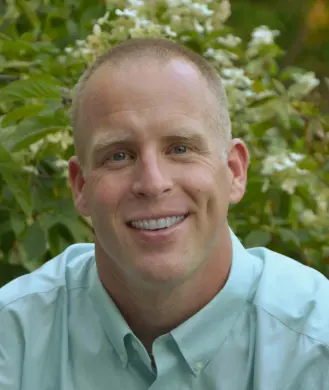
“My advice I’ve been giving since I was a 22-year-old pool manager out of college to my lifeguards is, ‘Open a Roth IRA with that summer job money. Even if it’s […] 50 bucks, just get started.'”
– Gene Natali
What do a free lunch and a Roth IRA have in common?
My latest guest (and clear contender for The “Metaphor of the Year” Award), Gene Natali, will enthusiastically educate you. Prior to serving as the CEO and CFA of Troutwood, a financial technology company, Gene spent 17 years working with large pension funds and institutional investors. He is an award-winning author who has key-noted investment and education conferences across the country and spoken in over 500 high school and college classrooms. Gene is a Chartered Financial Analyst (CFA) and holds a bachelor’s degree in Economics from Allegheny College as well as an MBA with a concentration in finance from Carnegie Mellon University. He is also a board member of CFA Society Pittsburgh, a part-time lecturer at the University of Pittsburgh and an Executive in Residence at Penn State Behrend. Gene resides in Pittsburgh with his wife, four children and (not to be forgotten!) chocolate lab.
Links (From the Show)
- Resources mentioned
- My recent article on “The Age of Self-Sufficiency”
- The Council for Economic Education’s Survey of the States
- Rating sites I have used with my family during our own college search process:
- The College Scorecard
- College Data
- College ROI (Georgetown)
- College ROI (Payscale)
- College ROI (Brookings)
- Niche
- Gene’s work
- His book with Matt Kabala, The Missing Semester
- His most recent book, The Missing Second Semester
- His financial technology company, Troutwood
- The Troutwood app
- Gene’s book recommendations
- Dr. Seuss’s Oh, the Places You’ll Go!
- Homer Hickam’s Rocket Boys, which inspired the film October Sky
- The Harry Potter series
Show Notes (Find what’s most interesting to you!)
- Gene’s elevator pitch introduction [2:50]
- Raising money-smart kids in what I refer to as “The Age of Self-Sufficiency” [6:28]
- When it comes to teaching our children money smarts, it’s okay (and even encouraged) to start with “I don’t know.” [9:34]
- The demise of the traditional pension fund has created a new world for parents who MUST talk to their kids about money. [9:53]
- The importance of small steps and giving up control [13:26]
- Gene provides us with a simple timeline to explain why we often miss opportunities to save (and why we need to break the taboo hanging over money conversations). [14:11]
- We must consider the opportunity cost of college since the continued price increases don’t match the ROI. [18:26]
- An alma mater is no longer the most important piece of information on a resume. [22:10]
- Starting a Roth IRA for a high school student who is earning employment income is an essential way to begin investing. [25:49]
- We need to help our children create their own retirement income to replace defined benefit programs (like pensions) that only 1% of their generation will have. [28:26]
- Being brave enough to ask questions [33:13]
- “You don’t get time back.” (If there’s a sentiment that underscores the importance of this episode, then this is it.) [34:42]
- The real danger of credit card interest rates: what Gene calls “opportunity lost” [37:39]
- Advice for parents looking to take the next step [43:29]
- Gene’s definition of the term “money empowered” [45:08]
- The Natali family chore chart (Gene is another proponent of tying chores to allowance.) [45:27]
- “The best version of you is you.” [47:23]
- The simplicity of saving [47:58]
- Gene’s book recommendations (including his family’s nightly quarantine activity) [48:34]
- Finding Gene on the web [49:53]
- Gene’s Number One ask for listeners [50:17]
Click here for the full transcript.
If you liked this episode …
Still wrestling with the idea of giving up control of your kids’ spending? Financial advisor turned speaker Ellen Rogin breaks down her family’s allowance system and explains why giving children control of their own money matters. You can also view one of our podcast shorts on this topic.
Wanting more information on a system like Gene’s, in which chores are tied to an allowance? Personal finance journalist Cameron Huddleston discusses how she set up a system for her kids that links allowance to chores. Be sure to tune in at 13:56 for all the details.
Please Subscribe
If you like this podcast, then please give us a review and subscribe to the show. The Art of Allowance Podcast is available on iTunes, Spotify, Stitcher or Radio Public. Subscribing is free, and it will help me produce more enriching content for you to enjoy. Thanks!
You might also want to check out The Money Mammals, our program to get your children excited about money smarts when they’re young. Until next time, I wish you and your family well as you journey forth.
Thanks for listening.
John
Full Transcript
This transcript is from The Art of Allowance Podcast, Episode 44, featuring host John Lanza and guest Gene Natali.
00:00:00,200 [John Lanza]
Hello, and welcome to The Art of Allowance Podcast. Thank you for joining me on this journey, listening and learning from my guests. If you enjoy this show, I would so appreciate your taking the time to leave a rating and a review on whatever service you use. These ratings do matter because they help me increase our audience size, and that makes it easier for me to bring on the insightful guests that you’ve come to expect from the show. Also, I now record video of all my conversations and we provide you bite-sized video nuggets of the best content from each show on our YouTube channel. So check out the link in the show notes or search Art of Allowance Podcast in YouTube. And now, onto the show.
00:00:46,440 [Gene Natali]
My advice I’ve been giving since I was a 22-year-old pool manager out of college to my lifeguards is open a Roth IRA with that summer job money. Uh, even if it’s … Gosh, I’ve had students do it with 50 bucks. Just get started. That’s one of the great, uh, things that the financial technology movement has done, it’s created some easier ways for young people to … Uh, Fidelity has a no fee, no minimum, uh, mutual fund option now. So we’re seeing a lot of advancements in this arena. Roth IRA for high school student, just do it. Just do it.
00:01:20,480 [John Lanza]
[Music]
00:01:25,340 [John Lanza]
Today, I am talking with Gene Natali. Prior to serving as the CEO and CFA of Troutwood, a financial technology company, Gene spent 17 years working with large pension funds and institutional investors. He is an award-winning author who has keynoted investment and education conferences across the country and has spoken in over 500 high school and college classrooms. Gene is a chartered financial analyst, a CFA. He holds a bachelor’s degree in economics from Allegheny College and an MBA with a concentration in finance from Carnegie Mellon University. He is a board member of the CFA Society of Pittsburgh, a part-time lecturer at the University of Pittsburgh, and an executive in residence at Penn State Behrend. Gene resides in Pittsburgh with his wife, four children, and not to be forgotten, chocolate lab. And as you’ll see, Gene has wonderful insight to share with us about how we can all do a better job of raising our kids money-smart and money-empowered. Enjoy the show.
00:02:35,120 [John Lanza]
Today, I am talking with Gene Natali. So Gene, great to have you on the podcast.
00:02:41,640 [Gene Natali]
John, it’s a pleasure to be on the podcast.
00:02:43,960 [John Lanza]
So I’d like you to tell our audience, uh, all about yourself.
00:02:49,100 [Gene Natali]
Uh, boy, uh, I can give you the short answer that I’m really boring, but that would make this a short episode. Uh, so I’ll back a little bit-
00:02:55,760 [John Lanza]
That’s gonna be two boring people talking to each other then. [laughs]
00:02:58,940 [Gene Natali]
We’ll do the best we can. Uh, so currently, I, uh, I’m the CEO and co-founder of a company called Troutwood. We are a financial technology company operating out of Carnegie Mellon University. Uh, been doing that for the past two years. Prior to Troutwood, I worked in institutional investing, which is, think large pension funds, large endowments, foundations of universities and colleges that your audience is likely familiar with. Um, I can bridge those experiences as we- we dive in, uh, in terms of education background. I went to Carnegie Mellon for, um, graduate school, a small liberal arts college, Allegheny, uh, here in Pennsylvania. For my undergrad, I was a- a collegiate swimmer, long since retired. Um, enjoy anything outdoor-oriented. I’ve a beautiful wife, four kids and a chocolate lab that I love to spend time with. There’s the elevator pitch, John.
00:03:50,880 [John Lanza]
You know, it’s funny, I had a friend who went to Allegheny. I’m originally from the East Coast and I used to joke with him, it wasn’t that funny a joke, uh, but I would say ’cause Allegheny Air had changed to US Air, so I would say, “Oh, you’re going to US Air College?” This is way back when. This is back in the ’80s when, uh, when they changed that. So I’m familiar with Allegheny, I have a very good friend who went there, so … [laughs]
00:04:12,560 [Gene Natali]
It’s a, it’s a pretty part of our state, Meadville, Pennsylvania, one of the … You know, Pennsylvania’s re- ren- known for just small beautiful communities and Meadville is one of those.
00:04:22,200 [John Lanza]
Yeah, we spent a lot of time, uh, a number of friends who went to Pennsylvania colleges, so when I was in school, uh, in the ’80s, we were in Pennsylvania, um, causing a ruckus. So, um, so Gene, you and I met virtually during a presentation, uh, with the Jump$tart Coalition, which is a nonprofit coalition of organizations to which we, uh, both belong, uh, Troutwood and my company Snigglezoo. And, um, it’s focused on improving financial literacy outcomes for kids in kindergarten all the way through high school. And you piqued my interest because you just started by saying that we needed to teach our kids money smarts because they now exist in this world. And it- it was like I was listening [laughs] to myself in a- in a- in a weird way, you said, you know, we’re now … There’s- there’s not gonna be any income for life. These kids are not gonna have any defined benefit programs like pensions. They’re kind of gone the way the- going the way of the dinosaur. Um, you also touched on this idea there’s no safe place to ask questions, to which I’d add that, uh, we need to help parents be guides for their kids. Um, you mentioned that social media gives non-experts a platform so misinformation is rampant. Um, the ad-based revenue model that companies have developed, uh, these kind of consumer marketing techniques that are more targeted than ever, which means not only do marketers know how to target groups of which you’re a part, they know how to target you individually. Um, the reason this resonated with me and why I immediately contacted you and said, “I need to have you on the podcast,” is I’ve taught this idea called the age of self-sufficiency. And I think you like- you summed it up. I- it’s ju- just- w- it’s so connected with what I’ve been doing. So I want to start with a more general question here. A- and first, when you answer, just correct anything that I’ve said f- … that’s not clear or if you would characterize differently. Uh, but how should we get started raising money-smart kids today in this kind of age of self-sufficiency, particularly if we as parents may feel under-equipped to be our kids’ guides?
00:06:26,775 [Gene Natali]
The, the, the parent under-equipped part is, I think, a conversation we sh- we should dive into ’cause I think there are very fair reasons that we find ourself in that scenario. To answer the specific question, kids is a broad range, right? So I’m gonna say zero to 22, uh, and the hope being by the time we hit that, that 22 that we are ready to kind of push the boat off and, and, you know, go get the dreams.
00:06:53,856 [Gene Natali]
There’s certainly a, a lot of credence to the younger that we start to have this conversation, the higher the likelihood that we succeed in, you know, driving home the lessons we hope to drive home. The bulk of the efforts that I- I’m seeing kind of across the country are in high school arena. Um, that means we need to push upstream and downstream from there. I, I think-
00:07:12,926 [John Lanza]
Yeah
00:07:12,926 [Gene Natali]
… the numbers are currently seven, seven high schools or seven states have a personal finance requirement. That’s nine through 12.
00:07:20,616 [John Lanza]
Yeah.
00:07:20,996 [Gene Natali]
Uh, John, I teach at the University of Pittsburgh, a personal finance course. I have 32 students out of 20,000 on campus.
00:07:27,635 [John Lanza]
[laughs]
00:07:27,695 [Gene Natali]
Uh, [laughs] the, the calculator will tell us that’s a very small percentage of the student body.
00:07:32,496 [John Lanza]
Are you the only one who teaches that course?
00:07:34,996 [Gene Natali]
One other instructor, same, same student size. So if you double-
00:07:37,645 [John Lanza]
Wow
00:07:37,655 [Gene Natali]
… that number, that’s still… We’re not hitting the, the-
00:07:39,635 [John Lanza]
[laughs]
00:07:39,645 [Gene Natali]
… population size that we-
00:07:40,885 [John Lanza]
Yeah. No, not at all
00:07:41,575 [Gene Natali]
… we need to do.
00:07:42,155 [John Lanza]
Yep.
00:07:42,736 [Gene Natali]
Uh, now take that nine through 12 and push downstream, middle school, you know, K through five. Uh, so if we’re not getting it and we’re focusing on a narrow window, a lot has to happen around the dinner table or the breakfast table or at home.
00:07:59,496 [John Lanza]
Yeah, yeah.
00:08:00,275 [Gene Natali]
Which is where we can influence the conversation.
00:08:02,916 [John Lanza]
Yeah, yeah, definitely.
00:08:05,135 [John Lanza]
So, you know, in your book, you … Uh, you know, actually let, let’s, let’s, let’s, let’s kind of dive into that. So how do we … So for, for parents, um, uh, the schools are one thing. And like you said, there’s only seven states, I think you’re right about that, that have personal finance standards. Whatever the number is, it, it updates from time to time. There’s a thing called the Survey of the States, uh, by the Council for Econom- Economic Education, and we can link to that if people wanna check that out. Uh, but it’s, there’s not, there’s … The, the, the point is you basically should, uh, assume, unless you don’t know, un- unless you know, that your state is not teaching k- your kids, uh, financial literacy in the high schools. So what do we do in the … You know, what’s a good way to get things started? Let’s, let’s start with the, in y- in, in the younger side, you know. Um, let’s start in the, in sch- for school-aged kids. Like, what’s your recommendation for, uh, for parents who, you know, uh, are
00:09:10,836 [John Lanza]
just, you know, somewhat not necessarily uncomfortable, but just don’t know how to get started teaching their kids about money? Like, what would you recommend to a parent if I said to you, “Gene, you know, you’re an expert in this. I have a five-year-old. What, what do I do to, to, to start educating my, my child about money smarts?”
00:09:32,776 [Gene Natali]
I like that question, John. And my, my answer is gonna be pretty concise. I think it’s okay for parents to say, “I don’t know.” And, and spend time with their son or their daughter and, and get the answer to the question. And the reason for that being my answer to that question is, one of the reasons I think we find ourselves in this, this current environment is that many parents and their parents, i.e. our kids’ grandparents, didn’t have to have this conversation because of the existence of the traditional pension fund.
00:10:04,435 [Gene Natali]
And I’ve given the story in the past that my grandfather could maybe buy a house that was a little too big or make a credit card mistake, but he had a pension fund. So it didn’t come at the expense of his savings as his long-term kind of financial security. Parents, this arena is new. Uh, our kids aren’t gonna have that. Uh, so we have to have this conversation. When I’m in the classroom with my students at Pitt, no surprise, John, they go home and mom and dad aren’t familiar with what we’re teaching. So I, I challenge my students always to push the conversation upstream-
00:10:39,216 [John Lanza]
Hmm. Yeah
00:10:40,156 [Gene Natali]
… for parents with kids that are younger, in that K through 12, we’ll push it downstream, but have fun learning together.
00:10:46,356 [John Lanza]
Yeah, yeah.
00:10:46,826 [Gene Natali]
Uh, I’ll be honest, as an instructor, one of my favorite moments is when a student asks a question that I have no idea what the answer is.
00:10:53,175 [John Lanza]
[laughs]
00:10:53,366 [Gene Natali]
And we dive into it as a class. [laughs]
00:10:56,195 [John Lanza]
You know, I love that because one of the kind of seminal moments of my education was I, I happened to be a bio major. I did not use that. I, I loved bio and then realized at my senior year that, uh, I just wasn’t a lab person, like, for my li- it wasn’t gonna be what I wanna do for my life, but I really enjoyed it. But I remember taking an intro bio course and then being a TA for the intro bio course ’cause I did pretty well on the intro course. And, um, and I … And as, as a TA, a student came up to me and asked a question. I didn’t know the answer, so I turned to my profe- to the professor who was teaching the class. And, uh, he turned to me, uh, Professor Joe, and he’s like, he’s like, “I don’t know the answer to that.” And it was ’cause he’s, he’s a geneticist, right? So he’s teaching intro bio. He doesn’t remember. I forget, this was like some kind of physiology question, human physiology question from intro bio. He had no idea. He’s like, “Let’s go look in the book. Let’s find the answer.” And the reason that was really a m- a key moment for me is I realized, like, these g- they don’t know immediately, like, they, they real- they don’t know everything. They’re, they know … I mean, if we wanna talk about the Drosophila melanogaster, he could talk about that for days, like, be- ’cause he’s a geneticist. That is a fly that they test. Like, he, they could talk. But when it came to human physiology, the- you have to go to the person in the department who is the physiologist, right? Um, so it was an, it was an eye-opener that they don’t know everything, but they can help you find the answers, right? And that’s what I, you know, as you know as a, as a college professor. And I like that, but I still think the difficulty is this un- you know, ’cause we’re talking about money, and money is such a taboo topic, right? So if you have this setup where-L- you’ve got parents who are uncomfortable with a subject, and then the child brings it up. Uh, you know, you certainly want them to be open to conversation about it, but it’s, it’s … As, actually, I think the, the key thing is how do we pry open this, that conversation, so that they are going to feel comfortable having it? Particularly if they’re, uh, if they’ve … ‘Cause you made the point that, yes, we should be able to say, “I don’t know,” and we should be able to share, um, the fact that we … Our, our vulnerabilities, our mistakes, um, you know, that? Uh, so, I’m, uh, es- particularly for the, uh, for the parents of the younger kids, like, what are some potential techniques they could use with those younger kids in order to have that kind of, to, to open up a conversation?
00:13:24,972 [Gene Natali]
In my opinion, it’s one of the hardest things that we do as parents. That’s transfer ownership, or said differently, transfer responsibility to our children.
00:13:33,912 [John Lanza]
Mm-hmm.
00:13:34,072 [Gene Natali]
Uh, and that’s losing a little bit of control, which can be extremely difficult. Um, you know, lessons like,
00:13:42,092 [Gene Natali]
as simple as chores, the responsibility of waking up and making your bed. Uh, you’re teaching kids invaluable lessons the younger you start that. And if you teach them that it’s okay not to do it, you’re, you’re, I think, also potentially teaching, uh, an example. Uh, those are small steps, but small steps are important in terms of achieving longer-term goals and objecticoves- excuse me, objectives.
00:14:03,052 [John Lanza]
Yeah.
00:14:04,771 [John Lanza]
Yeah. Now, and I-
00:14:05,172 [Gene Natali]
But like, on that point, uh, just like … I don’t know if this, it might be helpful to just like, like, “What’s the path?” Like, “How, how do we get to that point where …” Like, like, think of, like, to your question, it is a taboo topic, but as a parent, and it’s a real feeling, we feel nervous because the question is a hard one. But let’s, but what if we just back into the macro? What’s the environment that’s creating the questions, and then what, as we, what can we, as parents, do to best prepare the, you know, people we love more than anything in this world, our children? Uh, I, I, I’ve in, in conference settings, said, you know, “What is more important than giving everything we have to our children?” [laughs] Help us be better as parents. The arena from zero to 18, you know, we’re young, we’re invincible, right? Maybe we get a job in high school, and we, we get a- a paycheck. Maybe the biggest paycheck we’ve ever seen is a, a few hundred dollars, but yet then we sign student loan obligations for a giant dollar amount. And, and how many of us read the size A disclosures on those to fully understand what we’re doing? But no big deal, it’s the path. We go to college for four years. It’s great. We know we sign this thing, we get to revisit it in, in four years. Six months after graduation, we start paying it back. Okay, it becomes a legal obligation. You learn that, and many of us, the hard way. Let’s make sure we back into that, and that’s very manageable. I’m not, I’m not a, you know, negative on the student debt. I’m just painting the, the picture of how we get a parent who feels unprepared for this question.
00:15:28,302 [John Lanza]
Sure, yeah.
00:15:29,312 [Gene Natali]
Statistically, from 22 to 32, we, as individuals, focus on repaying our debt. At 32 years old is when the average American begins to think about that retirement, that savings picture.
00:15:40,792 [John Lanza]
Yeah.
00:15:41,292 [Gene Natali]
But what else happens from 32 to, call it, 52?
00:15:45,561 [John Lanza]
[laughs]
00:15:45,561 [Gene Natali]
We start our families. [laughs]
00:15:47,212 [John Lanza]
Yeah.
00:15:47,271 [Gene Natali]
We buy homes. [laughs]
00:15:48,572 [John Lanza]
Yep, yep.
00:15:49,942 [Gene Natali]
Uh, and I, I, I want to frame a home as not an investment, but as an asset or a liability, depending on how you manage it.
00:15:55,572 [John Lanza]
Yeah, yeah.
00:15:56,442 [Gene Natali]
And that puts us at 52. And also, we’re saying, “Wait a minute. What just happened? I blinked, and that just happened.”
00:16:01,792 [John Lanza]
Yeah, yeah.
00:16:02,122 [Gene Natali]
And we play catch-up.
00:16:03,322 [John Lanza]
Yeah.
00:16:03,352 [Gene Natali]
So the earlier we have a conversation with our kids, the less likely they become on that kind of robotic path that we’ve seen so often in America.
00:16:10,352 [John Lanza]
Yeah, yeah. Now, uh, that’s a very good point. And actually, I, I, so we had discussed, uh, before we came on, we were doing, uh, asked you kind of an icebreaker question. I decided, you know what, let’s, let’s, let’s save this. Uh, well, actually, you decided, I think it’s a good idea. Let’s save this for the podcast. So, and this seems like a good time to ask this question because it, it involves student debt, ’cause I have a, a high school senior, and we’re trying to make a decision. So we’ve saved enough in our 529 that basically covers our state school, right? Um, she’s gotten into a state school. Uh, we’ve kind of narrowed it down to two schools. So there’s a state school. Um, then there is a, there’s another state school, but it’s in a different state. Um, so it’s not in the crazy numbers, you know, the $80,000 a year that, that we’re talking for some of these, uh, private schools. But it’s in the, say, $60,000 range. Uh, whereas the state school’s in the $40,000 range. And so, uh, we have been discussing the amount, you know, we’ve been discussing the monetary aspect of this the whole time. But of course, now the emotional aspect is she prefers to go, and we all, we agree that it’s a better fit, this other state school. So there’s a gap of that $20,000. And, uh, part of that gap is going to be covered by her taking out a student loan. We’ve, we’ve said roughly that’s gonna be about, say, one third of that amount. And it’s a conundrum because we really don’t know if there is any, if there’s incremental value. We’re never gonna, we’re not gonna get an answer to this, but we’re not gonna know if there’s incremental value between the $40,000 option and the $60,000 option. Like, we’ve looked at all different types of measurements. ROI, there’s a few different ROI measurements. There are kind of prestige measurements, which you can get everywhere. There are kind of college rating me- measurements that come up at, at different sites. And I could put the sites that we use. You know, there’s a Georgetown ROI site. There’s a site called Niche. There’s obviously U.S. News & World Report.
00:18:07,831 [Gene Natali]
Mm-hmm.
00:18:08,012 [John Lanza]
All, there’s, there’s no shortage of ratings places. But it appears that though the one school is a better school on, on most measures. So we’re trying to figure … So I would like your perspective on that dilemma.
00:18:24,652 [Gene Natali]
I, I have two perspectives. Uh, and Niche is a company I’m familiar with. They’re based here in Pittsburgh as well. Um, my first perspective, John, is if we think differently, as opposed to comparing college A to college B, what if we compared the opportunity cost of that decision? And by that I mean, what if your … uh, for kind of broadly speaking, any parent with a high school senior. What if your son or daughter chose college B, which costs a little bit less, and did something like $5,000 in a Roth IRA for those four years? I’m just using the kind of numbers you, you had thrown out.
00:18:57,316 [John Lanza]
Yeah.
00:18:57,436 [Gene Natali]
I would challenge parents to, to do that example, and then to believe the number they see. It’s giant. It’s bigger than any, uh, value that at least I see, uh, taking place in the classroom. And I say that because the academic environment is changing rapidly around us. Uh, when I graduated Allegheny College, you had to be in the classroom
00:19:20,816 [Gene Natali]
to learn. You had to go to the library to get information.
00:19:23,536 [John Lanza]
Yeah. Yeah.
00:19:23,716 [Gene Natali]
Uh, that was 2001. I graduated, date myself. My students now can be in my classroom at the University of Pittsburgh-
00:19:30,476 [John Lanza]
[laughs]
00:19:31,386 [Gene Natali]
… on three different devices, uh, do- doing whatever they want.
00:19:35,525 [John Lanza]
Right.
00:19:35,536 [Gene Natali]
But said differently, they could be learning through those three devices. So somehow, the academic arena, uh, it, it’s already changed. Uh, professional certifications, I think, my personal opinion, and I- I’m glad I, I don’t have to figure out the college conundrum for the next 10, 20 years.
00:19:49,896 [John Lanza]
[laughs]
00:19:50,456 [Gene Natali]
Uh, because at some point it’s a model that, in my opinion, has to change.
00:19:53,686 [John Lanza]
Yeah.
00:19:53,716 [Gene Natali]
The continued price increases don’t match with the ROI.
00:19:57,636 [John Lanza]
Correct, yeah.
00:19:58,256 [Gene Natali]
To borrow your term.
00:19:59,456 [John Lanza]
Yeah.
00:20:00,956 [Gene Natali]
Uh, but I’d say that particularly what, what, what would be am- amassing in Pittsburgh, I’m seeing 18 to 22-year-old kids that are mega talented, mega talented.
00:20:12,646 [John Lanza]
Yeah.
00:20:12,656 [Gene Natali]
Because they’ve taken ownership of a trade. Maybe it’s coding. Um, maybe it’s cooking.
00:20:19,296 [John Lanza]
Mm-hmm.
00:20:19,676 [Gene Natali]
I got, I received an email from, um, uh, a young man north of Pittsburgh who started a dog grooming business.
00:20:24,556 [John Lanza]
Yep.
00:20:25,256 [Gene Natali]
Didn’t go to college, but now has three stores doing dog grooming.
00:20:28,686 [John Lanza]
[laughs]
00:20:29,496 [Gene Natali]
Uh, I love that kind of way of framing that conversation, John.
00:20:32,066 [John Lanza]
Yeah.
00:20:32,076 [Gene Natali]
Because the burden of feeling the societal pressure to go to college, to go to the highest-ranked, most expensive college … And again, I’m not saying that’s a bad decision for everybody.
00:20:41,776 [John Lanza]
Sure, yep.
00:20:41,986 [Gene Natali]
It’s personal.
00:20:42,896 [John Lanza]
Yep.
00:20:43,356 [Gene Natali]
But there’s an opportunity cost to that choice-
00:20:46,036 [John Lanza]
Yeah
00:20:46,076 [Gene Natali]
… that should be considered-
00:20:47,976 [John Lanza]
Yep
00:20:48,276 [Gene Natali]
… um, particularly in lieu of how, how attainable education is right now.
00:20:52,676 [John Lanza]
Yeah. I think that is terrific advice, to look at the opportunity costs. And, and we’ve had some of those discussions, but we haven’t had the alternate, and I’m definitely gonna have that discussion, of, you know, if you took that money, you took that, that extra money … I mean, if you took some amount of that money, you know, ce- certainly the, the amount that we’re asking you to take out as a loan, you know, and you, uh, and you invested that money, there’s just no [laughs] there- there’s, there’s almost no doubt you put that in any kind of decent mutual fund, that that value is gonna be more than the, than the incremental value of that, that education. Um, now, there is more to it than that. I mean, that’s just the monetary value, right? So there is educational value, and that’s, that’s, that’s the danger of all. That’s why you have to kind of gather and triangulate all these different points. Um, ’cause I can hear people saying, “Well, it’s not just about, you know, the money.” I said, “But, you know, the two schools are, you know, one is ranked slightly higher, but you’re, you’re gonna get a pretty good education at either school,” right? So, uh, that, that’s really the difficult part of the conversation, um, is that. So I, I think that opportunity cost framing, uh, makes a lot of sense. So, thank you. Fantastic.
00:22:08,576 [Gene Natali]
Well, and to that point, John, let’s take those two schools. But let’s say the student applying to both does everything else the same. Same great GPA, you know, same school organizations or, you know, sports athletic clubs. Same outside of the classroom training. Those are two really interesting resumes.
00:22:31,876 [John Lanza]
Yep, yeah.
00:22:32,596 [Gene Natali]
All else equal. The only thing different is the name of the, beside the education.
00:22:36,976 [John Lanza]
Yeah.
00:22:37,236 [Gene Natali]
And that’s what I think is so changing, because I, I w- I, I got, I lived at that, that world where the school mattered a ton. And I, you know, no offense to schools. Um, it, it still does. But it was the most important piece on the resume not so long ago. Uh, and now, when I, when I get resumes, we get them from, um, you know, all around the country. I’ll give you a sampling. Last, last summer we had students from Harvard, Northwestern, Carnegie Mellon, University of Pittsburgh, Penn State Behrend, one of their branch campuses.
00:23:05,836 [John Lanza]
Yeah.
00:23:05,896 [Gene Natali]
Fantastic students.
00:23:07,756 [John Lanza]
Yeah.
00:23:07,996 [Gene Natali]
John, you would not have been able to guess which student from which school.
00:23:11,916 [John Lanza]
Yeah.
00:23:12,636 [Gene Natali]
So parents, like, you know, hint, hint, hint right there.
00:23:15,276 [John Lanza]
Mm-hmm. Yeah, I think the … And there is, you know, there, there are particular professions where that, the credential matters a lot, right? Um, but everybody knows those professions. You know, in finance, law, there, you know, there, there are professions. And that’s fine, but we’re not, we’re not talking about that at this point, you know? And I, and one, one of the things we’ve always said is like, Ito- because she doesn’t know what she wants to do, perfectly fine. Neither did I. Uh, neither do most people. Um, and even if they do, they may not really know what they want to do. [laughs] And the point is, if you need the credential, you can go get it. Go get your credential later, if it’s that important, right? Go get it, either transfer to get your credential or get it in graduate school, if that matters, right? So, um, well, ne- we’re kind of dabbling with, uh, investment. And, uh, since I know you’re a CFA and I have a brother who’s going through the CFA process right now, I, I know you know your stuff. So, I have to ask you, so in, in your book you write about this phenomenon that I first, uh, read about in Jason Zweig’s Your Money & Your Brain, I’m sure you’re familiar with that book. Um, and, and it’s, it’s on average we are terrible, uh, decision-makers, particularly when it comes to investing. Um, and of course then you pair this with the Lake Wobegon effect, which is that we most, most of us think that we’re better than average, and we have a recipe for disaster, right? Um, so … the parents end up being poor investors, the kids end up being poor, [laughs] poor investors. The cycle continues. Or you get to that point, like you said, you hit 32 and you haven’t even invested. And then all of a sudden you’re 52 and you’re like, “What the heck just happened?” Right? So how do we interrupt this cycle? ‘Cause I think this is a lot of what you’re doing at Troutwood. Um, but how do we interrupt the cycle? How can we best prepare ourselves and then introduce our kids to investing? When should we start? Give us the lowdown here, Gene. [laughs]
00:25:12,515 [Gene Natali]
The- there’s two ways. Speaking to the parent audience, I, I love the question, John, and I spend a ton of time thinking about this. Um,
00:25:20,136 [Gene Natali]
and for purposes of just a very, very brief background, I, I work with some of the largest pension funds in America, so it was in that boardroom, hearing how they make decisions. There was a piece of that pension fund that was set aside for what they called current workforce,
00:25:35,255 [Gene Natali]
i.e. the people who were still showing up nine-to-five, not the retirees.
00:25:39,276 [John Lanza]
Yeah.
00:25:39,336 [Gene Natali]
That workforce was invested to, differently than the piece for the retirees. So parents,
00:25:45,876 [Gene Natali]
that’s how we need to think. Um, my advice I’ve been giving since I was a 22-year-old pool manager out of college to my lifeguards is open a Roth IRA with that summer job money.
00:25:57,216 [John Lanza]
Yep.
00:25:57,596 [Gene Natali]
Uh, even if it’s … Gosh, I’ve had students do it with 50 bucks. Just get started. That’s one of the great, uh, things that the financial technology movement has done is created some easier ways for young people too. Uh, Fidelity has a no fee, no minimum, uh, mutual fund option now. So we’re seeing a lot of advancements in this arena. Roth IRA for high school student, just do it.
00:26:20,516 [John Lanza]
Tell me-
00:26:21,216 [Gene Natali]
Just do it
00:26:21,235 [John Lanza]
… tell us why a Roth IRA.
00:26:25,316 [Gene Natali]
So the reason for a Roth IRA is twofold, particularly when we’re talking that target audience and parents, your, your son or daughter does have to have earned income, which means they have to have a, a job, which for most of us starts at 15 or 16 years old. Uh, a Roth IRA is contributed to with after tax income, which means your 16-year-old has already paid taxes, which means with the standard deduction of $12,400 in 2021, if they didn’t exceed that,
00:26:53,375 [Gene Natali]
their tax rate is zero and the lowest it will ever be in their lifetime. It’s-
00:26:57,816 [John Lanza]
Yeah. Yeah
00:26:59,076 [Gene Natali]
… in economic circles, they call it a, a free lunch. I call it as close as you can get. Um, imagine doing that all through high school and college.
00:27:05,696 [John Lanza]
Yeah.
00:27:05,876 [Gene Natali]
Wow. Um, then there’s a whole nother conversation if we can talk to state legislature to, to do some stuff, uh, but that’s, that, but I won’t go down that rabbit hole.
00:27:15,436 [John Lanza]
[laughs] Well, I, I like the, the free lunches idea because that’s the same thing that, uh, you know, if our kids end up in a, um, any kind of, uh, job where they are investing in a 401[k] and there’s a matching program. So I remember, uh, you know, that’s, that’s something you talk about in your book. It’s, it’s looking for those free lunches, ’cause they, uh, they, they actually are out there and you have to be … Is actually my, uh, I’ve always said, like I, I created this program called The Money Mammals, but my m- my wife is really the OG Money Mammal. Um, she is the one, uh, when I had, when, back when I had, when I had a job and wasn’t running this company and had a 401[k] and was working for a big company, you know, she was like, “You are matching every dollar [laughs] that they will match.” Uh, “You are investing every dollar that they will match.” And yeah, you gotta look out for those, those free lunches. So that’s, I think that’s, that’s a, that’s good general advice. You know, actually, I think it’s worth detailing. You said that when you were with the fund, you had, they invested differently for the current employees than they did for the retirees, right? Can you elaborate a little bit on that? ‘Cause then you said that’s what you should do, parents. But can you elaborate on that for parents?
00:28:25,716 [Gene Natali]
So when a pension fund has employees, actually beneficiaries, and the beneficiaries are who the pension fund is administered for, and that includes retirees and current workers.
00:28:37,376 [Gene Natali]
Retirees need, every month or every other week, checks being sent in the mail. That comes from the conservatively managed piece of the portfolio. Investments like cash and fixed income, traditional bond investments. The risk side of the portfolio managed in generally equities and other risk-like assets, real estate, uh, would be an example, is meant to grow with that workforce. Um, because a pension fund offers a, um, essentially a, a manages for an expected rate of return to meet the benefits, the benefits are quite simply the income for life that employees are given.
00:29:15,755 [Gene Natali]
Like, now parents, like, don’t worry, back, back up, um, because we just talked about the Roth IRA. So actually, actually, parents, step back in. You have to replace income for your life for your kids who aren’t gonna have a pension fund. I think the number is less than 1% of the class of 2021 is gonna have a traditional defined benefit plan as part of their retirement package. So, very low. The most common question I get about Roth IRAs from students and parents is, “How do I open it?” And even like, like, “What kind of an investment is a Roth IRA?” Well, and a Roth IRA is not an investment. It’s a, it’s a, it’s a structure that you can place an investment inside and the structure, uh, is a great structure because for this, this younger audience,
00:30:02,596 [Gene Natali]
that after tax piece that we mentioned earlier, said differently, means your son and daughter don’t have to do any math. The money in the Roth IRA is all theirs.
00:30:10,676 [John Lanza]
Yeah, yeah, yeah.
00:30:12,216 [Gene Natali]
The money in your 401[k] isn’t all yours.
00:30:15,116 [John Lanza]
Yeah.
00:30:15,136 [Gene Natali]
The government has a vested piece in there too and they’re excited to watch you grow that account. Roth IRA, easy math. Money is all your son’s or your daughter’s. I think that is giant.
00:30:25,416 [John Lanza]
Yeah.
00:30:25,755 [Gene Natali]
There’s a second really interesting piece of that, John. Um, COVID taught us last year, March and April, and just, um, uh, the, the, the tragedy of the times that emergency funds matter. Being prepared in advance of the problem is a big deal. R- Roth IRAs, the money that you contribute, which is called principal, can be withdrawn at any time without penalty … so by also encouraging your son or daughter to take these steps at this young age-
00:30:56,268 [John Lanza]
Mm-hmm
00:30:56,588 [Gene Natali]
… you’re inherently beginning to build their emergency fund for 5, 10, 15, 20 years from now, in the event they ever need it. Because not everyone does need it, but if-
00:31:06,007 [John Lanza]
Yeah
00:31:06,018 [Gene Natali]
… they do, it’s there. So I think it’s a, it’s a double-edged sword that is … Gosh, if I could figure out a way to get every young person to do it, uh, I would. I haven’t figured that out yet.
00:31:15,148 [John Lanza]
Yeah [laughs]. Yeah, well, you- you’re putting in the good fight. And the other thing that is so much easier now is there’s these, you know, uh, the 529s, you can … They have, they have timed funds, so, you know, if you invest, you take your, what’s, uh, what is it, in your … Whether it’s a 401[k] or, you know, it’s a IRA or it’s a, um, Roth IRA, you can have a timed fund so it will adjust the risk level as you get older, so you really … It kind of super simplifies everything. Like, you don’t actually have to do … Uh, you can, uh, if you need to, but you don’t have to do the allocation changing, it’s done automatically and that … It’s, uh, there, it’s, it’s really made as easy as possible to accomplish the things that you’re talking about. The stuff that ends up sounding complex, it’s really just a matter of getting started, isn’t it? I mean, it’s more than anything. That’s really, like you said, that’s y- the issue is people just don’t even know how to get started. Once they get started, then that’s, that’s kind of w- we just need to kind of start pushing that, you know, proverbial s- you know, 5,000, how- however many thousand pound wheel. And then we have all of us, you know, starting, m- moving the cycle in the way that we want it to go, like in a positive way, so. And let’s talk … We talked a little bit about investment here. Um, I do want to ask you, so I, I read the book before … I read your book, uh, The Missing Semester. I did not get a chance to read the update. But in the book, you dedicate it to your, uh, to your daughter Kaylin, uh, and, and your co-author, Matt, uh, his son Nolan. And, uh, I didn’t get a chance to read the updated edition, but I’m guessing there were some learnings from the, the kids to some extent or just some realizations, ’cause I know, um, Kaylin’s still not even a teenager yet, so. Uh, but can you tell us, are there any lessons that resonated that informed the new book? Um, that would be helpful, I think.
00:33:13,187 [Gene Natali]
Absolutely. So that, uh, s- second book, The Missing Second Semester, was published late last year, and that book is dedicated to students across the country who were brave enough to ask questions. And because when you hear the same question enough times, um, light bulbs start to go off even if you’re a slow learner like I am. Uh, I’ve given talks in over 600 unique high school and college classrooms, and every one of my superpowers is just being an intensive listener. I love to try to understand a situation. I can tell you, John, the two most common quest- well, three, but the, the two most common basic questions, “What is a Roth IRA and what is the S&P 500?”
00:33:56,808 [Gene Natali]
Generally, the answers to those questions surprised me in all of those settings. Very few students knew what either was.
00:34:05,348 [Gene Natali]
Fast-forward into the college classroom, I like to kind of bridge a lot of my experiences. The single most common question I get from a college student graduating is, “Gene, should I pay off my student loans or contribute to my 401[k]?” It’s never, “How much should I do for both?”
00:34:22,398 [John Lanza]
Yeah.
00:34:22,408 [Gene Natali]
It’s which one. And remember-
00:34:24,496 [John Lanza]
Yeah
00:34:24,496 [Gene Natali]
… that’s just the 32 students in my classroom. That’s not the other 19,000 that aren’t-
00:34:28,018 [John Lanza]
[laughs]
00:34:28,018 [Gene Natali]
… in the classroom.
00:34:28,987 [John Lanza]
Right.
00:34:30,087 [Gene Natali]
So the second book is obviously … The Missing Semester was the Money 101, The Missing Second Semester was the Investing 101 based off of those, you know, 600, uh, classrooms. And I- and, uh,
00:34:42,208 [Gene Natali]
just the, the short takeaway is, um, you don’t get time back. And it’s, uh,
00:34:50,288 [Gene Natali]
i- it’s frustrating when it comes to money because what I see in, in my generation is the folks that understand the way it works, but missed the opportunity.
00:35:01,428 [John Lanza]
Yep, yep.
00:35:03,188 [Gene Natali]
That’s a very frustrating realization. Uh, so f- what, what can we do as parents to help our children capture that opportunity? Because what is that opportunity? It’s, it’s not Lamborghinis, big houses, and fancy cars. It’s financial independence. It’s, uh, sleeping at night.
00:35:21,988 [John Lanza]
[laughs] Right.
00:35:22,638 [Gene Natali]
Like the, the things that we as parents can relate to and-
00:35:25,788 [John Lanza]
Yeah
00:35:25,798 [Gene Natali]
… gosh, we wish and look upon our kids, I don’t want them to have money stress. And what can we do now to prevent that?
00:35:32,667 [John Lanza]
Yeah, and to your time point, I remember reading, uh,
00:35:36,368 [John Lanza]
that … I think it was Warren Buffett. You probably know the exact numbers, but he achieved something like 90 to 99% of his wealth after age 50, right? And it’s not because he suddenly made a whole ton more money. It’s because that money was compounding like crazy, right? Um, you know, he is making certainly more investments, but it’s really hard to get that point across to … I mean, not only to understand that point intellectually. Like, well, you can understand it intellectually. It’s still really tough. This opportunity cost, we go back to that. It’s the, the more you can think about that, the better off you are, and that’s the thing I’m trying to instill in my kids and, and, and using my own mistakes as a way of trying to help inform them, but not in a, you know, in a kind of, you know, w- I went to school up- uphill both ways type way where they roll their eyes. In a way that is kind of more resonant to them, right? So we, we produced this new program for teens and tweens where we’re just trying to make it easy to get across key things like living beneath your means, right? You know, that’s, that’s such a key element. If you can, if you can kind of curtail your spending and just take any extra money that you’re inevitably going to make in your career and start siphoning that into investments like you’re talking about, your life is gonna be just so much easier. And it’s not about … You know, and, and everybody’s gonna have to craft their lives to, to … The reality is … L- money is going to be a part of your life, right? So, uh, this isn’t about necessarily achieving some, you know, massive, um, uh, uh, amount of money. It’s about, it’s about crafting whatever life you, you have. And as you get older, money is gonna be a part of that, and you just want to have that financial freedom to be able to do what you, what, what you want with your money. Be empowered, be in control of the money, right? So, um, [smacks lips] I wanted to ask you, uh, you… The last question before we get into our fast and fun round questions, I think, is … [smacks lips] E- we’ve talked about investing, but there’s also this dangerous side, uh, and you really talk about a lot of it. The first half of your book is about the dangerous side, yeah. Uh, the trouble you can get into with a credit card, right? So, uh, and I- I’m just gonna take your exact example, where you, if you make the minimum monthly payment, 2% of, uh, um, of an outstanding balance in this example, do you know how long it will take to pay off a $5,000 credit card balance with a 20% interest rate, you know, which is not uncommon? And as crazy as it sounds, it will take you over 56 years, and that’s assuming you don’t make a single additional purchase during that 56 years. Uh, even more frightening, that $5,000 purchase will cost you another 22,000 in interest payments, so it’d really cost you $27,000. And I’ve shared that I- I learned this lesson the hard way in a shorter span of time, where I’d bought … When I came out, uh, right outta college, I bought a $2,000 computer and didn’t pay it off [laughs] ‘t- ’til it was, ended up being a $3,000 computer. You know, since then, I have made it, uh, my, my mission to pay off my credit cards [laughs] every, you know, every month. But I learned the hard way, right? Uh, that, uh … But that wasn’t even as hard as it really, obviously, could be in, in this scenario, um, that you, uh, wrote about. So how do you suggest we teach our kids to get comfortable with credit cards? ‘Cause, you know, credit cards are something that they are inevitably going to use alm- you know? Uh, how can they use them effectively in an empowered way? Any advice?
00:39:10,536 [Gene Natali]
Education. Uh, credit cards aren’t a bad thing if used correctly. Unfortunately, one out every two Americans are using them badly. Some of that need-based-
00:39:19,446 [John Lanza]
Yeah
00:39:19,446 [Gene Natali]
… most of it want-based.
00:39:21,396 [John Lanza]
Yeah.
00:39:21,776 [Gene Natali]
Uh, so I, I have some students every semester that have maxed out multiple credit cards and can no longer open another one, so we have to figure out-
00:39:28,966 [John Lanza]
Yeah
00:39:28,966 [Gene Natali]
… how to reopen that credit.
00:39:30,896 [John Lanza]
Yeah.
00:39:31,256 [Gene Natali]
I’m gonna bridge my answer to your Warren Buffett comment. Um, Warren Buffett is also on record as saying, “I’ve lost half my money twice, and I’ll lose half again, and if I knew when, I’d tell you.” Parents, that means he’s lost 50% of his investments twice in his career. That’s super scary, right?
00:39:48,376 [John Lanza]
Yeah.
00:39:48,416 [Gene Natali]
Investing is scary ’cause we can lose money. Well, the numbers that you just read, John, are a lot scarier. A credit card with a 22 or 24% interest rate, that’s a minus 24% investment return. Do that two years in a row and compound it.
00:40:04,196 [John Lanza]
Mm-hmm.
00:40:05,036 [Gene Natali]
Uh, so I think if we think of credit cards differently, and again, opportunity cost or opportunity lost-
00:40:10,576 [John Lanza]
Yeah
00:40:10,666 [Gene Natali]
… in that case, we can get people thinking, um, because every nickel that is being spent [laughs] paying off that kind of … Uh, there’s nothing good you could say about credit card debt, so just awful debt.
00:40:25,216 [John Lanza]
Yeah.
00:40:25,326 [Gene Natali]
It’s money that could be going elsewhere, because the number that you gave for Warren Buffett was spot on, the 99%.
00:40:30,536 [John Lanza]
Yeah.
00:40:30,956 [Gene Natali]
Parents, educators, students, kids, it’s gonna work the same for you if you start.
00:40:36,756 [John Lanza]
Yeah.
00:40:37,116 [Gene Natali]
99% of your, your net worth, your wealth, will come from investment returns.
00:40:43,716 [John Lanza]
Yeah.
00:40:43,976 [Gene Natali]
Um, and the sooner you start, the bigger the number will be. And John, we do have a really, we have some really great goal profiles that help to humanize and show that in numbers in the- in the Troutwood app.
00:40:54,916 [John Lanza]
Yup.
00:40:55,136 [Gene Natali]
Um, that I would steer, uh, parents towards educational only, so kinda, kinda fun to play with. That’s a big deal. I like that number that you gave. I like that Warren Buffett quote that you gave.
00:41:05,096 [John Lanza]
Yeah, good. I’m glad I got that one right. I, uh, I, I had my own kind of Warren Buffett, ’cause my grandfather was the one that the day I graduated college, I d- I took a little longer to, to listen to him than I should have, but I, I did, uh, dedicate my book, The Art of Allowance, uh, uh, to him, because he said, he’s like, “Just understand the power of compound interest and live beneath your means.” And he was, I mean, he really is right. We used to make, and I, I, I said this before, but I, I, I like the point, which is we used to make fun of him because he wore basically a uniform, ’cause he didn’t want to invest his money in a- and didn’t wanna spend too much money on his clothes. He had his brown Sears top [laughs] and his brown Sears pants. He had some other clothes, but generally, that’s what he wore, and that’s because he knew the power … He, he knew about opportunity costs. He did not want to spend any of that money. He wanted to invest as much of that money as possible. And he, you know, he had a nice house. He had a … But not ostentatious, just a kind of … It’s very Warren Buffett-esque, you know? He lives in the same house. He’s lived in that house for, whatever, 56 years. You know, he had … My, my grandfather had a Mercedes, but he actually, at the time, he bought the Mercedes
00:42:14,996 [John Lanza]
in Germany. He was a pilot, and he had a deal so that he was able to get one for some ridiculous amou- you know, rid- ridiculous price, ’cause he could have it shipped, I think, on a plane acro- You know, he just had an ability to do that. Um, it’s not really a great example, but the po- [laughs] the point is that he was savvy about all of his purchases. So even if you saw something that looked like luxury, like a Mercedes, it was done in a very frugal way, is my point. Plus, it was just a better car at that time than most of the cars that were available, certainly American cars at the time, in terms of reliability. [smacks lips] So, um, [smacks lips] that is, uh … Yeah, there’s just, there’s, there’s, there’s so much that comes from that kind of old-school [laughs] knowledge. There’s a reason why it stands the test of time, because it is, uh, it’s, it’s good information. Lemme get this straight. You’re, you’re, you’re-
00:43:04,182 [Gene Natali]
Yeah, yeah, yeah
00:43:04,182 [John Lanza]
… 20 years into this thing?
00:43:04,182 [Gene Natali]
I’m 20 years into it, yep.
00:43:04,182 [John Lanza]
Okay, so I want to … Uh, there’s, there’s, there’s a number of questions I wanna ask you about, um, before we get into … But I, you know, I think we need to get into our fast and fun round questions because, you know, uh, I don’t wanna take up too much of your time here, Gene, so. But, but only if you are fully prepared for this, for this, uh, for this round.
00:43:24,952 [Gene Natali]
Uh, I am fully prepared and, uh, I’m just gonna feed off your last comment there, John. For parents that, that you, you resonate with, it, it is easier than you think.
00:43:33,232 [John Lanza]
Yeah.
00:43:33,492 [Gene Natali]
Y- you know, and if they’re looking for, like, a next step, you know, companies like Fidelity, Vanguard, Schwab, you can call the hotline, there is no fee to ask questions,
00:43:43,332 [Gene Natali]
which means it is a riskless, safe place to just call and say, “I’ve got a 16-year-old son and daughter. Can we just ask some questions?” Sure.
00:43:51,532 [John Lanza]
Yeah.
00:43:51,992 [Gene Natali]
Happy to help.
00:43:53,112 [John Lanza]
That’s great. And I, you know, I, one thing I wanna say is, uh, not to make a shameless plug for your, for Troutwood but I went on Troutwood actually preparing for our conversation today, and I found information about how the student loans work, uh, that was so clearly and easily presented on those little cards that you have, that made it, that I sent to my daughter and to my wife immediately. And w- and, and s- and stuff that was unclear in terms of, you know, which loans, you know, what exactly is subsidized, what is an unsubsidized loan, how does it work, it, you made it so clear in the, those cards. So I, I just have to give a pitch for, for that, uh, if people are looking for, um, how to understand investing concepts or, you know, loan concepts, or, uh, these things that seem, that could be not even necessarily complicated but you can’t always get the answer you want, uh, Troutwood is a, Troutwood, T-R-O-U-T-W-O-O-D, um, is a great, uh, starting place, so.
00:44:56,152 [Gene Natali]
Thank you, John.
00:44:57,112 [John Lanza]
Good work there, Gene. Okay, here we go. Fast and fun round question. Gene, what does the term
00:45:04,292 [John Lanza]
money empowered mean to you?
00:45:08,252 [Gene Natali]
Money empowered, uh, means having the ability to spend time with people you love in places you enjoy being.
00:45:18,072 [John Lanza]
Beautiful. What is the best investment of time or money that you ever spent on your kids?
00:45:27,312 [Gene Natali]
T- time is any time, particularly one-on-one when you can have a conversation, uh, wi- with my kids. And probably the best money, uh, a why answer here, one, our chore chart. We have a 25 cents a chore chart that hangs on our refrigerator and boy our kids fight over things like feeding the dog, making their beds, cleaning the house, even, you know, picking up dog poop in the front yard.
00:45:48,582 [John Lanza]
[laughs]
00:45:48,612 [Gene Natali]
So th- that’s money pretty, pretty well-spent.
00:45:51,032 [John Lanza]
Nice. You know what? I did not do my due diligence on this and I have to step out of the fast and fun round and ask you… Okay, so, so I’m on record as saying that we shouldn’t tie chores necessarily to allowance, right? Um, but, but that’s, uh, that’s, that’s, uh … But I know enough money smart people, I’ve, I’ve, I p- I am interviewed Cameron Huddleston on the podcast and, uh, she goes about it a different way. Can you just take a minute to explain how you do your allo- uh, if you d- how you do your allowance, if you have an allowance set up with the chores? Just give us that. That would be helpful.
00:46:27,892 [Gene Natali]
So we have three tiers. 25 cents a chore, for things like making the bed, cleaning up the, a bedroom or setting the table. We have a 50 cents for picking up dog poop. That’s the big one.
00:46:39,352 [John Lanza]
[laughs]
00:46:39,372 [Gene Natali]
And then, uh, not yet received by any of my children ages six through 10 is a dollar for special chores.
00:46:46,492 [John Lanza]
Okay.
00:46:46,852 [Gene Natali]
So no, no one’s got that. That’s a mom or dad, um, special edition. And our thought process is very simple. We don’t pay an allowance, uh, just for showing up, but is there a way to start to show that, “Hey, if you put the work in, there’s a lot of boxes you can put stars in here.”
00:47:02,072 [John Lanza]
Got it. So you’re, you’re requiring them to earn that money.
00:47:05,712 [Gene Natali]
They have to earn it, yes.
00:47:06,772 [John Lanza]
Got it. Okay.
00:47:06,942 [Gene Natali]
And it forms a little fun competition.
00:47:09,052 [John Lanza]
Cool. Okay, excellent. Um,
00:47:12,792 [John Lanza]
so what advice to your kids do you most hope that they will heed? You’ve got some great advice, so this is tough to narrow down to one.
00:47:23,172 [Gene Natali]
I’m gonna go non-money with the answer. The best version of you is you. Um, and I think that applies to kids of all age, particularly with the societal pressures, uh, that hit us from so many different mediums. The best version of you is you. Never forget it.
00:47:41,192 [John Lanza]
Very nice. They, uh, they’re lucky to have you as a dad.
00:47:45,572 [Gene Natali]
Oh, thank you.
00:47:46,892 [John Lanza]
[laughs] Yeah. If you could transmit a message, uh, that everyone would see, so sky-written, on a billboard, wherever it might be, what would that message say?
00:47:58,352 [Gene Natali]
Save first. It really is that simple.
00:48:02,652 [Gene Natali]
And then I’d-
00:48:03,222 [John Lanza]
Nice
00:48:03,222 [Gene Natali]
… really sign, in small font, I’d say, “Because retirement is changing in America.”
00:48:06,812 [John Lanza]
[laughs] I li- I, you know, I really like that, save first. I like the, “It really is that simple,” that little, uh, tagline underneath. That’s, that is a great, that’s a great spee- great piece of advice. What is one parenting or money smarts book, podcast, frankly any media, that you go back to or that you gift the most often? And it, it could be more than one if the, if you wanna say more than one thing.
00:48:34,412 [Gene Natali]
Th- that’s a really hard one for me to answer ’cause I am a voracious reader, uh, and, and books across all mediums.
00:48:40,912 [John Lanza]
Yeah.
00:48:40,972 [Gene Natali]
Probably the most popular I’ve ever given is Dr. Seuss’s Oh, the Places You’ll Go!, which I think is just kind of beautifully written in terms of some of the messages.
00:48:48,432 [John Lanza]
Yeah.
00:48:48,972 [Gene Natali]
To … One of the more popular and less known books that I’ve gifted a fair amount is October Sky–
00:48:53,732 [John Lanza]
Hm
00:48:53,972 [Gene Natali]
… uh, which is a movie about … And then our current theme for the last 12 months in COVID, the first night of quarantine, we as a family began reading Harry Potter out loud each night.
00:49:05,312 [John Lanza]
Wow.
00:49:05,792 [Gene Natali]
We are … 50 pages from finishing book six and moving on to the final-
00:49:11,000 [John Lanza]
Wow
00:49:11,000 [Gene Natali]
… uh, page on the book. But we’ve, it’s been fun because that, uh, you know, I bring that up because other families in our circle sorta do the same thing as just a way to kinda-
00:49:17,721 [John Lanza]
Yeah
00:49:17,721 [Gene Natali]
… come together in the evenings and, you know, turn off the devices and just be together.
00:49:22,372 [John Lanza]
Wow. That is wonderful. That October, I remember October Sky ’cause that was, that was a Homer Hickam? Was that the … Yeah, yeah. That was a great movie.
00:49:31,452 [Gene Natali]
Great movie, great book.
00:49:33,252 [John Lanza]
Yeah, we will definitely link to that ’cause I, I forgot about that. Excellent. Um, good, and uh, okay. So, uh, you, you passed the fast and fun round [laughs] question, Gene. Uh, I really appreciate it. So how can, um, how can people find you on social media and, uh, and/or the web?
00:49:53,292 [Gene Natali]
So troutwood.com. I’m really pretty bad at social media. I’ve not used it a, a whole lot. Uh, so troutwood.com would be, I think, the, the best place, and then obviously very proud of both The Missing Semester and The Missing Second Semester.
00:50:06,632 [John Lanza]
Great. And those are both available on Amazon. Uh, what is one action that you’d like people to take that would be helpful to you?
00:50:17,532 [Gene Natali]
Uh, if, um, one action would be opening a Roth IRA for their sons and daughters. It’s not helpful to me, but I think it’s helpful to society.
00:50:23,792 [John Lanza]
Yeah.
00:50:23,952 [Gene Natali]
Uh, that would be my number one ask for parents and students listening.
00:50:29,232 [John Lanza]
I had a feeling you’d go that direction. As a, you know-
00:50:31,482 [Gene Natali]
Yeah
00:50:31,482 [John Lanza]
… as, as a college professor, you know, that’s, that’s, it’s gotta be the answer. [laughs]
00:50:36,172 [Gene Natali]
John, I think it’s life-changing.
00:50:37,772 [John Lanza]
Yeah.
00:50:38,022 [Gene Natali]
I, I believe so passionately in the, in the power of what a Roth IRA and investing can do for young people.
00:50:44,852 [John Lanza]
Yeah. I appreciate it. I appreciate you bringing that passion onto this podcast. I mean, we, I think we met, like, two, two weeks ago at this, uh, Jump$tart conference, and, uh, I knew the second we talked that, [laughs] that I had to have you on the podcast. And I’m so glad that you agreed to be here because, uh, uh, it’s, it’s everything that I’d hoped. It’s so much good information, not only for the audience, but for me personally in particular as we kinda weigh this decision ’cause we’re right here at the end of April. We have, like, a few days [laughs] before Decision Day, and, uh, and I appreciate that, that framing, uh, around opportunity cost ’cause that gives us something else to think about that’s, uh, I think useful.
00:51:26,482 [Gene Natali]
Uh, likewise, John. Uh, it’s been a pleasure, and, uh, shout out to Jump$tart for making, you know, introductions and run-ins like this possible.
00:51:33,892 [John Lanza]
Yes. Totally. Thanks again, Gene. That was great. [instrumental music]
00:51:42,912 [John Lanza]
And yet another conversation in which I truly learned a ton. I am grateful to Jump$tart for helping connect Gene and me to have this conversation. Uh, my brother Mark is in the midst of getting his CFA, which is a certification that Gene has. It’s a series of three tests. It’s incredibly intense. And you just get the sense that Gene is one of those guys when you talk to him, this is another phrase that my brothers and I use, that he’s playing chess and I am playing checkers. He just has such a keen financial mind. So, my wrap-up here is to listen to and follow Gene’s advice, particularly when it comes to starting the Roth IRA. I can tell you that we will be doing that with our girls this summer as they both have real jobs lined up. And I will leave you with Gene’s timeless words of wisdom, “We don’t get time back.” [instrumental music]
00:52:45,232 [John Lanza]
I hope you enjoyed this episode of The Art of Allowance Podcast. Please subscribe to our show and leave a review wherever you listen to your podcasts. This will allow me to have more conversations with money experts and parents, and sometimes both, to get more ideas that can help us all raise more money-smart and money-empowered kids. You can find out all about our movement at themoneymammals.com. The Money Mammals, our program to get your kids excited about money smarts when they’re young, is now a part of our new program for families, The Art of Allowance Project. It also includes adolescents for tweens and teens. You can find out all about this new program on our site, themoneymammals.com. Of course, please consult with a financial or investment professional before engaging in any decisions that might affect your financial well-being. And until next time, I wish you and your family well on your own money-smart journey. Thanks for listening. [instrumental music]