“Kids need control over their own money.”
— David Owen
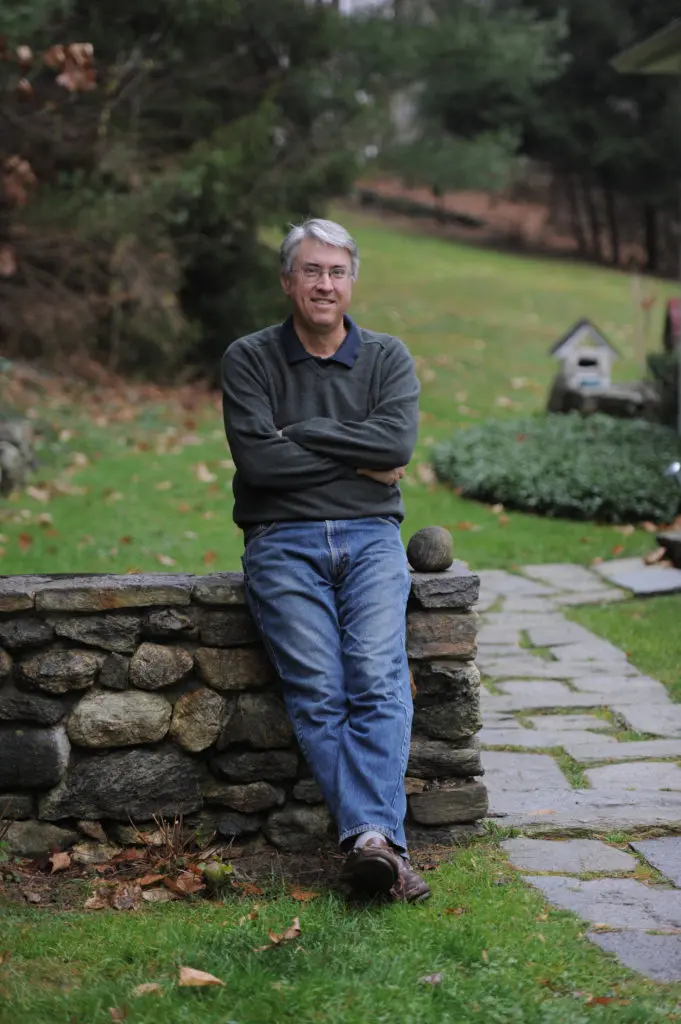
Do you fret about giving your kids too much autonomy when it comes to money and allowance? In this episode of The Art of Allowance Podcast, my guest David Owen offers a candid, funny and time-tested glimpse into the family financial system he wrote about in The First National Bank of Dad: The Best Way to Teach Kids About Money. This is a wonderfully written and hilarious book which heavily influenced my most recent work, The Art of Allowance. Using a method he developed to provide maximum age-appropriate control, David was able to raise two money-smart, money-empowered children.
David has been a staff writer for The New Yorker since 1991, and he is also a contributing editor at both Golf Digest and Popular Mechanics. Named one of The Fifty Funniest American Writers, he is the author of more than a dozen books, including the aforementioned First National Bank of Dad and the recent Volume Control: Hearing in a Deafening World. This episode is chock-full of enlightening information, from simple tactics like David’s enhanced interest program to his broader philosophy that autonomy drives learning. I hope you enjoy this discussion as much as I did.
SHOW NOTES (Find what’s most interesting to you!)
- How David’s daughter made him realize that his plan to teach her money smarts was no good [2:59]
- How we unwittingly teach our children to spend the money that they receive as quickly as possible [5:24]
- During our conversation, I mention the recent AICPA (The American Institute of CPAs) survey. Here’s my blog post reaction that I reference. [6:21]
- David describes his enhanced interest program — 5% per month — and how it helped adjust his kids’ behaviors almost immediately. What’s more, it actually allowed his 6-year-old son to basically understand compound interest! (If your child is in need of a visualization of this topic, then download this free graphic.) [8:09]
- A simple plan to reduce vacation spending on tchotchkes [13:29]
- How giving your child monetary control changes arguments to conversations [15:53]
- David explains that his son began to consider his possessions assets because of the control he had been given. They became part of his “wealth,” of which he was a steward. [17:54]
- “The Beanie Babies experience” taught David’s son about markets and how bubbles pop. [19:29]
- David mentions the “Dutch tulip thing.” He was referencing “Tulip Mania,” often considered the first recorded example of a speculative bubble. [22:18]
- David never worried about his kids’ doing something foolish with money because the damage was limited by the relatively small funds they were given. In other words, they were learning financial lessons on their own in a low-stakes environment. [24:18]
- David and I have an interesting exchange about whether or not a Share jar makes sense. You can decide what you think. [26:29]
- Am I doing this because I’m worried that my child is going to do something stupid with it?: The quiet conversation you should have with yourself before making decisions about strategies and tactics you want to employ to teach your children money smarts. [31:19]
- Being honest with your kids and with yourself [32:31]
- Dollar matching as an incentive [33:36]
- David explains his family’s next financial step — The Dad Stock Exchange — and why it didn’t work at the outset [34:53]
- Another step forward: The Dad Money Market Fund [37:31]
- Money as a driving force: “When you don’t care about money, all you think about is money.” [39:31]
- Being open about limits [41:02]
- To the extent that you can, you should provide an allowance that will grant your kids a “sort of flush.” [42:04]
- David doesn’t believe that chores and allowance should be tied together. (I share my thoughts on the allowance / chore debate in a past blog post.) [43:54]
- David’s interesting take on working in high school and the “life lessons” that children might learn [47:09]
- Musings on bed making [52:49]
- “First National Bank of Dad, The Next Generation”: David’s daughter’s article in The Boston Globe on implementing the family’s financial system with her own kids [54:08]
- Money empowerment as money control [56:50]
- Reading to children as an investment [57:13]
- I mention the term “emergent financial literacy.” This paper by David Godsted and Martha McCormick introduces the concept. [58:56]
- Money in The First National Bank of Dad era versus now: paying for Starbucks on a college campus [1:01:07]
- The value of written recollections [1:02:06]
- David’s recommendations: pieces written by his daughter, Laura Hazard Owen, and Dr. Benjamin Spock‘s works [1:04:30]
- Finding David on the web [01:09:23]
- David’s newest book, Volume Control: Hearing in a Deafening World [01:09:57]
Click here for the full transcript.
Looking for more tips to introduce financial literacy to your kids? Bill Dwight, a fellow father and the founder of the “Virtual Family Bank” FamZoo, offers investing advice as well as allowance strategies with real-world implications.
Wanting to further develop your children’s relationships with saving? Award-winning financial educator Sam Renick explains that saving is a leading behavior that encourages more complex monetary skills, including investing. His discussion of incentives and how they build money behaviors is also quite informative.
Curious about the “above and beyond chores” that David and I mention in this episode? Author and podcast host Ruth Soukup provides her interpretation of this concept during her appearance on The Art of Allowance Podcast. Be sure to listen in beginning at the 35:20 mark.
If you like this podcast, then please give us a review and subscribe to the show. The Art of Allowance Podcast is available on iTunes, Spotify, Stitcher or Radio Public. Subscribing is free, and it will help me produce more enriching content for you to enjoy. Thanks!
You might also want to check out The Money Mammals, our program to get your children excited about money smarts when they’re young. Until next time, I wish you and your family well as you journey forth. Thanks for listening.
Full Transcript
This transcript is from The Art of Allowance Podcast, Episode 29, featuring host John Lanza and guest David Owen.
[00:00:00] John Lanza: Hello. This is your host, John Lanza, and welcome to Episode 29 of The Art of Allowance Podcast.
[00:00:07] David Owen: I tried to talk about money with my kids not by lecturing them, but by trying to give them some idea of what it’s like to be an adult, not to overwhelm them. Just to kind of g- give bits and pieces of non-scary parts of adult life, so they have some idea of what’s going on.
[00:00:30] David Owen: [instrumental music]
[00:00:43] John Lanza: In this episode of The Art of Allowance Podcast, my guest, David Owen, offers a candid, funny, and time-tested glimpse into the family financial system he wrote about in The First National Bank of Dad: The Best Way to Teach Kids About Money. His book is wonderfully written, and it’s hilarious, and it heavily influenced my own book, The Art of Allowance. Using a method that David developed to provide maximum age-appropriate control for his kids, he was able to raise two money-smart, money-empowered children. David has been a staff writer for The New Yorker since 1991, and he’s also a contributing editor at both Golf Digest and Popular Mechanics. He’s named one of the 50 funniest American writers, and he is the author of more than a dozen books, including the aforementioned First National Bank of Dad and the recent Volume Control: Hearing in a Deafening World. This episode is chock-full of enlightening information, from simple tactics like David’s enhanced interest program to his broader philosophy that autonomy drives learning. I hope you enjoy this discussion as much as I did. [instrumental music] Today, I am talking with David Owen. David, thanks for coming on the, uh, podcast.
[00:02:15] David Owen: Oh, thank you.
[00:02:16] John Lanza: So I know you’ve meant- written a lot of books. Uh, you are, uh, [clears throat] written for The New Yorker for a long time. But to me, you’re the guy who wrote The First National Bank of Dad, because this was really the first book that I read on kids and finance, and it continues to be very influential. And just, I’d like you to tell us, the audience, a little bit about yourself and why you decided to write First National Bank of Dad.
[00:02:43] David Owen: Well, let’s see. I’m, uh, I’m 60- uh, almost 65 now, and my kids are 35 and 31. So th- this, uh, a long time ago when my older child was three, my daughter was three, uh, I did the thing that parents always do. I, um, uh, we went down to the, to the bank in town and opened a savings account in her name with $100 in it. And I thought, “I’m gonna, I’ll teach my daughter about money.” And, uh, she was completely uninterested. I explained that, you know, if she left
[00:03:13] David Owen: that $100 in there, uh, for a year, uh, you know, th- at the end of the year, there would be $101. Uh, and, uh…
[00:03:21] John Lanza: [laughs]
[00:03:21] David Owen: [laughs] And th- it, I wasn’t gonna let her touch the principal, but if she, after a whole year, you know, a third of her life, uh, she would have enough money to buy about a half of a pack of gum.
[00:03:32] John Lanza: [laughs]
[00:03:32] David Owen: And, uh, and she was, she was not interested in this idea at all. And I thought, “Well, it just shows how immature she is about money.” Uh, and, uh, later, unfortunately several years later, I realized that, that actually I was the one who was wrong, and that the, that my daughter, like most young kids, I think, uh, th- the reason that she was uninterested in my plan was that she actually had a very good, clear understanding of money and how it works, and realized that I was, uh, basically just screwing her.
[00:04:02] John Lanza: [laughs]
[00:04:02] David Owen: And, uh, there was nothing in it for her. And, uh, she was, she was uninterested. So that was, uh, that was the beginning. Uh, unfortunately, it, it, it didn’t occur to me right away. It took a, it took a few years of, uh, of just sort of mulling it over and, and then finally, finally realizing what I felt the problem was.
[00:04:22] John Lanza: Yeah. Yeah, it makes, it makes so much sense, this idea that, yeah, the interest, uh, you know, or the dividends in the credit union world are, are just not enough to teach any kid that saving is a good idea.
[00:04:36] David Owen: No, it’s a, there’s, and there seems to be nothing, and I ti- I think also parents do, parents are sort of, uh, I think underlying most, uh, parental child saving schemes i- is just a desire on the part of the parents to confiscate their children’s money, ’cause they’re, they’re worried about what their children would do if they, uh, if they were, had the, the freedom to spend what they have. And because, uh, we feel that way, whether we, you know, openly or not, we give them all kinds of, uh, wrong signals. And I think because of the way, y- you know, if, if, if, if, uh, a grandmother gives a child, uh, $100 at Christmas, the parent will say, “Well, you know, we’ll, we’ll take that. We’ll put that in your college fund, and we’ll put it in, uh, you know, we’ll put it in a bank account and save it for something special.” If you’re five, you know, college is not, uh, an incentive. Uh, you think, you know, you, “We’re gonna put this away so that we can, when you get a little older, we can send you away to live with strangers and go to school all the time.” You know, it’s just not, it’s not what, how you envision your life-
[00:05:37] John Lanza: Yeah
[00:05:37] David Owen: … unspooling when you’re in kindergarten. Uh, and, uh, wh- so, but if you, you know, if the grandmother gives the do- the, the child a $5 bill, the child gets to keep that, they get to spend it. But because of their experience with these, y- you know, these other transactions with their parents, they think, “I better convert this immediately into some kind of hard goods that they can’t confiscate, so I’ll go buy candy or buy something.” And so, I think we give the, our children the idea that, uh, you know, that…… a five-dollar bill is real money, a hundred-dollar check is not. Uh, and no matter [laughs] which one it is, any money that comes into our hands, we, “Let’s get rid of it as quickly as we can, because my parents are gonna cook up some scheme to take it away from me.”
[00:06:21] John Lanza: Yeah. You know, it’s funny, ’cause there is, uh, the CPA association, the AICPA, just put out a survey, I don’t know if you saw that. But in the survey, they were saying that kids weren’t saving enough money. And they were intimating that kids should be saving, you know, uh, the- the lion’s share, per se, the- the- the majority of the money that they’re getting out of an allowance, which just doesn’t make any sense. ‘Cause no adult is saving, you know, a majority of their money. Or I should say maybe- maybe- maybe some FIRE, people in the FIRE movement are doing that.
[00:06:51] David Owen: [laughs]
[00:06:51] John Lanza: But most people are not doing that, right? They’re- they’re saving, you know, they’re- they’ll be happy to be saving 10%. And, uh, I- I think one of the things in your book that I really like is that, and this is kind of a recur- you have a few key recurring themes. But one of them is that, you know, you talk about the fact that parents feel like a child’s allowance should be set, you know, kind of low enough to prevent the child from spending foolishly. [laughs] And then, but you go on to argue that really, parents should err on the side of more responsibility and not less, which I think is what you’re getting at. Um, and I think that’s, it’s a really good jumping-off point for discussion. Because I totally agree, it’s just we want… The- the purpose behind giving them any kind of money at a young age is to have them practice with it, right?
[00:07:38] David Owen: Right, right. No, exactly. I think it, it’s- it’s sort of several things. They have to have money, they have to have some reasonable amount of money. They have to have control over it. Uh, you know, with the usual exceptions, you know, they can’t buy guns or drugs, uh-
[00:07:49] John Lanza: Yeah. [laughs]
[00:07:49] David Owen: … whatever the family rules are. But other than that, they- they need to have the latitude to screw up. And th- and then also, and this is, I think this was the key with my kids, they have to have incentives that feel like incentives to them. So, you know, I thought about it, going, “What- what would be a rate of return on saving that would seem real to a five or six or seven-year-old?” Uh, and I decided that it, you- you know, 1% a year wasn’t gonna do it, so I paid them 5% a month. Uh, and which compounded is like 70% annual percentage rate. And they immediately understood, they immediately [laughs] became savers. You know, it wasn’t 10%. I said, “You know, if your- you’ll get your allowance, I’ll put it in my bank,” which I just, I just kept in Quicken. Uh, and now I’m sure there are other ways to do it.
[00:08:34] John Lanza: Mm-hmm.
[00:08:34] David Owen: Uh, or- or you can do it on a- on a piece of paper. You know, “Your- your allowance will come into your account on the first of every month. And if you leave it there for a little while, you know, within a very short period of time, you can double or triple or quadruple your allowance, because it’ll build up.” And, uh, and they immediately, immediately got it. And my son, who was really little, uh, um, he, you know, he went around the house looking for change in the furniture-
[00:09:01] John Lanza: [laughs]
[00:09:01] David Owen: … [laughs] and bring it to my desk. And he wanted me to credit it to his account immediately so that it would begin charging up, which is what he called it. And it was amazing. You know, I was on a car trip with him. W- he and I were going someplace, we were going to the Lego factory in Enfield, Connecticut.
[00:09:14] John Lanza: Yep.
[00:09:14] David Owen: And it takes like, you know, over an hour to get there. And I thought, “Oh, well,
[00:09:18] David Owen: I’ll, uh, I’ll see if I can explain compound interest to him.” You know, he didn’t know how to do addition yet. Uh, and, um, but he got it. You know, I mean, [laughs]-
[00:09:29] John Lanza: [laughs]
[00:09:29] David Owen: … it’s, uh, all this stuff is, it’s, I think it’s- it’s intuitively obvious. And kids understand it very quickly, and it’s kind of human nature. And the, you are always more successful with kids if you, um,
[00:09:47] David Owen: if you’re, uh, harnessing human nature rather than trying to completely change it. And I think most, uh- uh, most parents’ instincts g- go haywire when it comes to money. So you want to force n- n- the ideas that, you know, “Here’s your allowance, it’s here’s your dollar, but you don’t get it all. You know, t- uh, 25 cents has to go into this jar to be your savings. And then this amount has to go into the church plate or this, your charity jar.” And kids realize, “Well, you know, my allowance isn’t X, it’s X minus these. It’s X minus Y and minus Z-“
[00:10:18] John Lanza: Mm-hmm.
[00:10:18] David Owen: “… the things in my parents’ account.” Uh, whereas if you, you know, the- the… My kids became savers really overnight, uh, because they saw that there was- there was something in it for them. Uh, it’s, I mean, it was, it didn’t take any [laughs] kind of… [laughs] It seemed sort of magical, but I just thought, “You know, this is- this is how I- this is how I respond to money.” Uh, I don’t save because someone cracks a whip over me. I think that if I postpone some of my spending now, I’ll be able to do more spending later for things that I might like- like more. And so I’m willing to forego some, uh, you know, some- some spending in the present, because I think that it’ll give me, you know, more spending power in the future. And that’s, uh, it’s a pretty simple idea. And
[00:11:04] David Owen: they, I think it was they had always understood that, and that’s why they had thought that, well, you know, my original idea had really stunk.
[00:11:11] John Lanza: Yeah. [laughs] Well, th- this- this idea of the responsi- uh, the theme of responsibility, now you brought in the other theme, which is the incentives. The incentives, it’s such a, this is, this was great, really fun for me to prep for this interview, because I got to read the book again, uh, and I hadn’t read it in a little while. And when I look at the incentives, it just reminded me, I need to read this book on a yearly basis, because it’s like I- I want to remind myself of how important it is to put yourself as a parent in the mind of your child to have them understand, you know, what you want. If- if you want to get something done, you’re much more likely to get it done if you incentivize it properly. I mean, this is ju- this- this is the truth for adults or- or for kids. But, um, I love that you have this story of, I think it was your daughter, when you’re talking about this, when she was really young as well, talking about… I mean, this isn’t necessarily money, but it’s- it’s tied to it, tied to the, um, this closet… You were doing a closet clean.
[00:12:10] David Owen: Oh, right. Right, right.
[00:12:11] John Lanza: … and-
[00:12:11] David Owen: Yeah
[00:12:11] John Lanza: … why don’t you tell that story a little bit? Because-
[00:12:13] David Owen: Uh-
[00:12:14] John Lanza: … this, I think, could be helpful to all parents [laughs] who are trying to deal with a messy room or a messy closet, or whatever it might be.
[00:12:21] David Owen: Well, so she was… Her, her little brother had been born, and it was my wife’s, uh, genius breakthrough thought-
[00:12:28] John Lanza: [laughs]
[00:12:28] David Owen: … which was she, my daughter had a baby blanket that she’d never used, or hadn’t used in, since she was a baby. And, uh, my wife said, “Oh, you know,” [laughs] “let’s give this to your baby brother.” And she said, “No, it’s, it’s mine.”
[00:12:42] John Lanza: [laughs]
[00:12:43] David Owen: Uh, and she s- uh, my wife says, “Oh, don’t… [laughs] It’s a baby blanket. Shouldn’t we use it for a baby?” “No,” you know, “it’s mine.” And, uh, uh, and then fi- My wife said, “Well, would you take $5 for it?” And [laughs] she said, “Yes.” You know, she stopped crying.
[00:12:56] John Lanza: [laughs]
[00:12:56] David Owen: “Yes, I would, I would take $5 for it.”
[00:12:59] John Lanza: Yeah.
[00:12:59] David Owen: And so that, the, uh, my wife did [laughs] other things too. There was, um, w- with the [laughs] there was some, uh, I can’t remember what movie it was, uh, um, it was maybe A Clockwork Orange [laughs] with-
[00:13:10] John Lanza: Yeah.
[00:13:11] David Owen: Or it was something that she wanted my s- she thought my son would really like. Uh, and he was l- he was older than five, well-
[00:13:17] John Lanza: Yeah
[00:13:17] David Owen: … older than five. And, or s- it was something she wanted him to watch. And-
[00:13:21] John Lanza: Yeah
[00:13:21] David Owen: … and she said, “You know, I’ll pay five bucks to watch it with me.” “Oh, okay.” [laughs] so it just, money is powerful, uh, if you use it. But it’s, I think the… Also
[00:13:32] David Owen: equally important is the, uh, is control.
[00:13:35] John Lanza: Yeah.
[00:13:36] David Owen: And, uh, having… Uh, kids need control over their own money. And so what I would see, we would go on vacation, and I would say, “You know, I’ve, I’ve added $20, uh, to each of your accounts. Um, the, uh, this is, this is your mad money when we’re on vacation. You can spend it on anything you like, you know, crappy souvenirs, whatever you want. Um, or you can spend it now, or you can keep it. You know, you can just leave it in your bank account. Up to you, but no further… Don’t ask me for, don’t ask me for money for any stupid stuff, uh, while we’re on the trip because you’ve already got it.”
[00:14:12] John Lanza: Mm-hmm.
[00:14:12] David Owen: And so then it was their money instead of my money. And where I s- th- there was this thought, we were at an actual souvenir store, uh, on Martha’s Vineyard, and there were some other kids there, and there were these crummy, uh, rubber tomahawks.
[00:14:25] John Lanza: [laughs]
[00:14:26] David Owen: Uh, [laughs] they were the [laughs] they were $5, and these kids were be- begging, uh, their parents, “I want these, I want these.” My kids knew [laughs] that we had had this discussion. They, they knew that there was, y- you know, it was up to them if they wanted it or not. They had the money.
[00:14:41] John Lanza: Mm-hmm.
[00:14:42] David Owen: And neither of them did, ’cause they were stupid. It was obvious. If you were spending your own money, it was obvious that it was just a piece of junk. And so they walked around looking at stuff and not buying anything. So my son went [laughs] and he was, he was really young. He, uh, he, there were, uh, unopened geodes. These, you know, they were about the size of billiard balls, three of them for a dollar, and you could take ’em and crack it open, and see the beautiful mineral cris- the crystals inside them. And he talked the woman who owned the store into se- into breaking a set and selling him one of them-
[00:15:14] John Lanza: [laughs]
[00:15:14] David Owen: … for 33 cents. So he had [laughs] he had $19.67 left from his $20. And he got something that was, I thought was, was truly worth it. And, you know, meanwhile, the other kids, they got… Their whole… Uh, what they were going with, they wanted to win a battle with their parents, and they won. And then what they, uh, you know, the, this crummy toy that they got, they got for it, meant nothing to them. And they, they stopped caring about it as soon as they got it. Um, so I think it’s just like… And my parents, uh, my, my kids [laughs], my parents. My kids got sick of this too. What, you know, I would say, “Oh, it’s your money,” and then they would mock me when I would say that.
[00:15:51] John Lanza: [laughs]
[00:15:51] David Owen: But it was, uh, but it was, but it was true. There was a- a- another example when my son, my son went bike riding with, um, some friends, and he decided that their, uh, their bikes were nicer than his bike. Uh, and I believe that… You know, there’s some things that I think are, are entitlements. You get a bike if you’re a kid.
[00:16:11] John Lanza: Mm-hmm.
[00:16:11] David Owen: Uh, and if the… When, when we were on vacation, it was on- this was only souvenir money that I was giving them. If we went out for ice cream, that was on me, you know? I think-
[00:16:20] John Lanza: Yeah.
[00:16:20] David Owen: I always think that if the senior member of the group, if you go out to eat or for a treat or something like that, you don’t make kids… Kids don’t reach into their pockets. It’s on the-
[00:16:29] John Lanza: [laughs]
[00:16:29] David Owen: … it’s on the grownup. Or you go to a movie, it’s on the grownup.
[00:16:32] John Lanza: Yeah.
[00:16:32] David Owen: And so this was… But he had… So he had… Uh,
[00:16:36] David Owen: he was unhappy with his bike. And I said, I said, “Well, um, I think it’s, uh, I think it’s a fine bike, but it’s your bike.” I said, “And it’s worth something. You could sell it, uh, and get some money for it. And what’s more, you have, you know, you’ve got a couple hundred bucks you’ve saved, uh, in your bank of dad account. Uh, you can afford a new bike if you want one.” And so then it was, it was his decision, and he thought about it, and he decided that he was okay with his bike. And that he would wait until, you know, like he would ask for it for Christmas or, or his birthday or something like that if he wanted another one. Or wait till he outgrew it, and he, ’cause he knew that, you know, then he, there would be a, you know, a, a mandatory age adjustment. He would get a new bike, uh, uh, no matter what. So it was just, it just took all the heat out of that conversation. If you, if you have that argument the way it usually takes place, it’s over… The, the argument ends up being over entirely irrelevant details, where-
[00:17:33] John Lanza: [laughs]
[00:17:33] David Owen: … the child is saying, “No,” you know, “my bike isn’t as nice as their bike.” And, and, and you’re saying, “No, it’s just as ni-” You know, three gears is every bit as good as 10 gears.
[00:17:42] John Lanza: Mm-hmm, mm-hmm.
[00:17:43] David Owen: Or what- you know, whatever it is. And i- it’s just… All you can do is bash your heads a- against each other. We… It never comes down to… Uh, it’s never as simple as it is if you just say, [laughs] “Fine, you know, get a new bike.” You have a… And, and he, he, he sort of… He became very… Uh, he became very much a steward of his possessions because now he thought of, he thought of things that he owned as assets, uh-
[00:18:06] John Lanza: Yeah
[00:18:06] David Owen: … that had sale value. And I think eBay was a great… E- eBay came along kind of at this time, and it made it possible for even a kid to-Um, uh, to get some cash [laughs] out of stuff. And so, he would, he would buy a video game, and he would cop, you know, make a copy of it. And then he would, on eBay, sell this virtually mint, uh, video game and get some money for it, that he could then, uh, you know, would then cover part of the cost of the next video game. And, and, uh, they just, they got [laughs], they were much, uh… [laughs] You didn’t have to tell them to take care of their stuff, uh, anywhere near as much anymore, because they, they saw it. You know, “These are, this is part of my wealth.”
[00:18:44] John Lanza: Yeah.
[00:18:44] David Owen: “Uh, I have, uh, you know, I have to, I have to, I have to be good to it.”
[00:18:48] John Lanza: Well, and the other nice thing about, uh, having a program set up where you’re empowering them and giving them some control is, you know, eBay is a good example, is that
[00:18:58] John Lanza: when they get these opportunities, then it opens up. It’s like you get all these other serendipitous opportunities to have conversations about markets and about, um, you know, the, the, uh, the, uh, the demand and, uh, supply of items. You talk a, a bit about that, uh, in the book as well, because I, I think there’s, uh, there’s a, uh, [laughs] fairly funny story about, with, with regard to these, uh, the Beanie Babies, and how, you know, at one point, you can get a fair amount of, uh, with, for them, and then the market just falls out. And that’s like-
[00:19:31] David Owen: The Beanie Baby, the Beanie Babies experience was, was… My son still thinks about it. Um, I talked about it with him recently.
[00:19:38] John Lanza: Mm-hmm.
[00:19:38] David Owen: It’s a, it’s a, it’s a great example of what, of why it’s important to give kids these experiences when they’re young. It, you know, uh, when, when screwing up
[00:19:49] David Owen: doesn’t, has no bad consequences.
[00:19:52] John Lanza: Yeah, it’s in a low-stakes environment.
[00:19:53] David Owen: Uh, but you-
[00:19:53] John Lanza: Yeah.
[00:19:54] David Owen: Right, right. But you learn the lesson, the lesson is the same. And what, what it was, was it, when he was in fourth grade, all the kids in fourth grade were buying Beanie Babies. And the girls were like, they were these adorable little friends and they loved them-
[00:20:06] John Lanza: [laughs]
[00:20:06] David Owen: … and, and they carried them around. And the boys, they were all like, “These are, [laughs] these are appreciating assets.” And they, they, they, they all would study this Beckett’s Price Guide, those printed price guides. They would, and they would, you know, talk about how much their collections were worth, and, and how much the value was going up. And I would, I would have these conversations [laughs] and say, “Boys, you know, these aren’t, Beanie Babies aren’t scarce. They just keep making more of them.”
[00:20:30] John Lanza: [laughs]
[00:20:30] David Owen: “They’re, they aren’t even worth what you paid for them. You know, stop buying them. This is insane. Uh, you’re not getting rich.” And, but they paid no attention. And, uh, and then [laughs] they, you know, they, they bought all this sort of, uh, uh, value, [laughs] value preservation paraphernalia. You could buy these little plastic, um, uh, kind of l- plastic, uh, cases…
[00:20:53] John Lanza: Yeah
[00:20:53] David Owen: … that you’d put on the tag, to preserve the tag.
[00:20:55] John Lanza: Sure. Yeah
[00:20:55] David Owen: Because if your tag was in cond- good condition and still attached, then it was supposedly worth more than-
[00:21:00] John Lanza: [laughs]
[00:21:00] David Owen: … it wasn’t. So I would, I would… You know, it drove me crazy. But then my son said to me one day, he said, “You know, I really need some money. I’m gonna sell…” And he put it up for sale on eBay. And somebody, somebody bought it for like $180. And so I said to him, I said to him, “You know, I’ve been lecturing you about this,” and, uh, saying that they weren’t worth anything. “I apologize. I was wrong. I’ll never tell you this again. I have only one last piece of advice for you. Sell your entire collection right now.”
[00:21:30] John Lanza: [laughs]
[00:21:30] David Owen: “Put it all up, put it all on eBay. Sell it now, sell it now.” And he said he sold one more for like, you know, another 180 bucks. And, but then he said he was gonna wait
[00:21:41] David Owen: for [laughs], for the, the, the market to keep going up. And then for, then, uh, the Beanie Baby market, the bubble popped.
[00:21:50] John Lanza: Mm-hmm.
[00:21:50] David Owen: And they weren’t, nobody was buying them anymore. And, and if, when he first sold his first one, I thought, “He’s gonna get the lesson that they shouldn’t, that the boys should, they should not have been taking their Beanie Babies outside and throwing them around in the yard, and then putting this, with these little plastic tags on to make them look like they were new.”
[00:22:04] John Lanza: [laughs]
[00:22:05] David Owen: Because the person who pays $180 for this is gonna complain immediately and send it back and be irate and turn them into eBay. But they were, the person [laughs] was delighted. So it was a kind of, it was mass delusion. It was the whole tulip, Dutch tulip thing. Uh, but so then the, the bubble burst, and he couldn’t get any money for them. But he still, you know, uh, he’s, [laughs] he’s, you know, he’s 30 and married and, uh, you know, has a good job. And he still thinks about, “Why didn’t I sell [laughs] my…”
[00:22:35] John Lanza: [laughs]
[00:22:35] David Owen: “… why didn’t I sell all my Beanie Babies?” But it was like, it’s like a vaccination. He is bubble-proof. Uh, he saw the, you know, the way psychology pushed up the prices on the way up, and then he saw the way everything crashed on the way down. So, um, it, you know, what, what, uh… You know, he, gr- uh, there are, most of the grown-ups in, who [laughs] have money in the stock market have not learned that lesson.
[00:23:00] John Lanza: Yeah.
[00:23:00] David Owen: And, uh, and, and he, and he got it when he was, when he was in fourth grade, so …
[00:23:04] John Lanza: And this, this was also close to the time of the dot-com bubble and bust too, right?
[00:23:09] David Owen: Hmm, yeah, right.
[00:23:10] John Lanza: Yeah, yeah.
[00:23:10] David Owen: No, it was, there was, there was, lots of, uh, things were reverberating, uh, right around there. It was, it was kind of after, it was a- he was born in 1988. So it was after-
[00:23:18] John Lanza: Okay
[00:23:18] David Owen: … it was after that. But it was fresh in the mind of his, uh, father.
[00:23:21] John Lanza: Yeah [laughs], right.
[00:23:22] David Owen: Um, and, uh [laughs], he, uh…
[00:23:25] David Owen: No, it’s, it was, uh, it just, you know, it’s, it’s, it was an amaz- It was an amazing, uh, an amazing lesson to be able to learn all, all. Uh, it, so, uh, relatively, uh, painful to him, but not in any, but psychologically not, uh, not, it didn’t ruin him. Uh, he didn’t lose his house because, um, he had done, uh, because he had failed to cash out his, his Beanie Baby investment at the right time.
[00:23:49] John Lanza: Yep, yep. And that, that, that’s a point we talk about a lot on this podcast. And I think it’s, what’s interesting is that, the irony of all this is that, you know, the concern that a lot of parents have, that you expressed in the book, is that they don’t wanna give their kids too much control or too much money. But, uh, the irony being that the more control and the more, and the, and the more appropriate the amount that you give them, the more likely are, more likely they are to probably spend less, and certainly be more responsible with that money, right?
[00:24:18] David Owen: Yeah. Right, yeah. No, that’s completely true. The… They… I never worried about, um,
[00:24:24] David Owen: that they were doing something foolish, because it was, it was their money. Or if they did do something foolish, uh, I keep using my son [laughs] as an example. He, he was also, uh, buying, uh, trading cards, basketball trading cards. And if you would like his collection, uh, you know, I could, uh, I could give it to you. Um, but it… there was one that he bought this huge box of-
[00:24:45] John Lanza: Yeah
[00:24:46] David Owen: … you know, and it was, it was, I don’t know. It was something crazy like $50, and I just had to bite my cheeks practically while he was doing it. But I thought, “You know, if I tell him that that’s a stupid thing to do, uh, it means nothing.” But he, you know… and later he said, “You know, I really…” [laughs]
[00:25:03] John Lanza: [laughs]
[00:25:03] David Owen: After he’d had the fun of opening up each package and seeing what was in it and being disappointed by it, uh, he, you know, then he said, “You know, I really [laughs] wish I hadn’t bought all these.”
[00:25:17] John Lanza: [laughs]
[00:25:17] David Owen: Uh…
[00:25:17] John Lanza: Um, yeah, th- all these lessons are just… They’re… They really… It, it’s so much better when they learn the… Well, it’s not even so much better. They’re actually gonna learn them if they learn them on their own versus being taught or being told about these lessons, right? And it’s just… That’s the main-
[00:25:31] David Owen: That’s really true, especially-
[00:25:32] John Lanza: Yeah
[00:25:32] David Owen: … especially if they see their parents kind of set- [laughs] setting terrible examples-
[00:25:37] John Lanza: Yeah
[00:25:37] David Owen: … and doing, and doing all the wrong things. Like, “No,” what did he say, “Don’t answer the phone. [laughs] Don’t answer the phone.”
[00:25:42] John Lanza: Yeah.
[00:25:43] David Owen: “It might be, uh, it might be Visa.” Um, you know?
[00:25:47] John Lanza: [laughs]
[00:25:47] David Owen: [laughs] These are not good exam- These are… You know, children are paying attention to that kind of thing, so.
[00:25:53] John Lanza: Yeah. That’s definitely true.
[00:25:53] David Owen: I think that’s… I th- I think that’s the other part too, where I tried to talk about money with my kids not m- by lecturing them, but by trying to give them some idea of what it’s like to be an adult. Not to overwhelm them. Just to kind of g- give bits and pieces of non-scary parts of adult life, so they have some idea of what’s going on. And, and I think… And, and another thing too, people say, well, you know, “Well, what about, uh, charitable giving?” And, and, and I think a lot of people recommend, well, you know, you, you tell your child, “Here’s your allowance and this much has to come out, and your… This is, you’re gonna give away to some, to s- to some good cause.” And I think it’s the wrong way to do it. And what… Because I think that if, if you’re start- especially if you’re starting young though, kids naturally, uh, almost all, except for, you know, I’m sure there are some who don’t, but my kids, they were, were very interested in, in doing good things. And, um, the, uh, ma- even sometimes more, they were more generous than, than I thought they really had to be. But I think the way to… I think the thing to do is to be, is to set examples. And so when, if, you know, if the parents are giving some money to, uh, uh, to a cause or, you know, to the Red Cross or to, uh, to a church or to a synagogue, you se- you, you, you know, you discuss, you know, you mention it. And not in a lecture-y way, but just to kind of show them that this is part of being a grownup. Because I think they… that’s how they learn, and they wanna do it, and they’ll do it all by themselves. And, um, and I think that’s much more effective than treating it as a sort of… than making it seem like a form, another form of confiscation or as a punishment or as a way of, of, um, taking [laughs] and making their, their gross, uh, reducing their gross allowance down to this little measly net amount that, that the parents aren’t scared of.
[00:27:48] John Lanza: You know, uh, it’s interesting because, uh, in, uh, there, in the, in the program that we talk about it, we do talk about kind of taking a portion out, a small portion out for, uh, we call it the save jar and then we have the share jar. Um, and, you know, and, and reading your book again, I, I, I, I see on the save side certainly, because kids are gonna find stuff that they cannot… that, that, that their… whatever money they have isn’t enough and, then they’re gonna, to, to get what they want, and therefore they can save for a goal. But on the share side, I just wanna, uh, I think I wanted to throw this idea at you just, and see what you say. ‘Cause we… I, I s- ’cause I thought a lot about it, ’cause I… and, and reading it, I, I know you don’t advocate for allocating that separately, but the other side of the coin is that what I’ve found is that when you put it in the share jar, if you automatically put it there, then you’re eliminating the opportunity cost, that judgment that they’re making about-
[00:28:47] David Owen: Mm-hmm
[00:28:47] John Lanza: … whether it’s gonna be something they would spend or not. And that I kind of think is pretty pow- in fact,
[00:28:56] John Lanza: I, I, I, I have been talking about this a few times on a few podcasts, then I realized, we need to do the same thing. And, uh, we kind of set up… yeah, so I, we set up a separate kind of, um, you know, internal account in our accounts, ’cause I realized I’m, I’m talking about this for my kids, we really need to do the same thing. So that, so that when the time comes that you, that something comes up that you want to donate to, you have the money and your decision is only, do I want to donate to that or do I not? Not, do I want to take some money that could go to something else that I might want to spend on myself and put it towards this cause? And so that’s, that’s the… I think that’s one of the, the advantages of having the jar allocated, is that then you just kind of eliminate the, the discretionary opportunity cost. Does that make sense?
[00:29:40] David Owen: Yeah, and I can say, you know, sure. It, uh, it makes sense.
[00:29:43] John Lanza: Yeah.
[00:29:43] David Owen: I think… but it’s not the way you save, it’s not the way you give away money. It’s not your boss saying, you know, “Here’s, here’s your… you make X, and, but we’re gonna take out this, and when you decide [laughs] who you’re gonna give it to-“
[00:29:55] John Lanza: [laughs] yeah, yeah
[00:29:56] David Owen: “… you can do it.” It just seems like, uh, you know, I d- I think there, there will be kids who will not, who do not feel generous.
[00:30:05] John Lanza: Mm-hmm.
[00:30:05] David Owen: Uh, but I think that if they ha- the- that if, um, if you set the example, if- if you do what you can… You have to and, and with that you have to start kind of young.
[00:30:15] John Lanza: Yeah.
[00:30:15] David Owen: Uh, so that they see this, and you have to be, and you have to be doing it yourself, and you have to be sharing some information about it. Not, you know, “Look, you know, what Mommy and I gave away.” But to say, you know, “Oh, I really want to help, uh…”Uh, maybe we can find, figure out a way to help, um, this, whatever the s- whatever the cause is. In, in, in my experience, kids, young kids are very interested in that. Uh, and, and if they start, then, then they keep at it. And they na- don’t think of it as some- as something that then that they think of that they’re doing, it’s not something that’s being done to them. But I, you know, I don’t know all these things. Who knows? Uh-
[00:30:52] John Lanza: Yeah, no. Uh, I, I’m not even, this is, this is really a point for… I, I’m throwing it out there just because the parents that are listening can think, can then kind of toss those ideas in their head and think about them and decide what’s going to work for them. That’s really
[00:31:06] David Owen: Right. And I, I think the, the, what parents always have to do, the, the, par- the q- the quiet conversation you always have to have your, with yourself is, am I doing this to, am I doing this because I really think it’s gonna [laughs] be good for my child, or because this is how, this is a way that I can pull some, some of this spending power away from my child and, and, you know, kind of put some of this money in a place where I know my child’s not going to do something stupid with it? Or, uh, the, y- y- y- you know, you have to be, you always, I think you always have to be careful [laughs] when you’re a parent that you’re being clear about what you’re up to. I think one thing that I, uh, that’s kind of similar that I noticed with, um, uh, w- with my wife and me that, that I think is another thing that parents need [laughs] to be careful about is, your kid does something bad, and you’re gonna punish him, uh, punish them. “You’re, you’re grounded.” And then, [laughs] and then you think, you kind of go through your, all your, mentally go down your list of all the things you’re going to have to… “And another thing, [laughs] you’re going to clean up your room.”
[00:32:02] John Lanza: [laughs] Right.
[00:32:02] David Owen: Uh, you know, there’s a ti- there’s a tendency to kind of pile on, uh, when you think you have them in a vulnerable position. And, uh, mm, I, I don’t know. They’re, kids are smart, kids are smart. They’re just, uh, you know, uh… Uh, and, th- and the more open, the more honest you can be with kids, and the more honest you can be with yourself, the better it all works. There was one thing that, that it just doesn’t, this is a little bit different, but it’s kind of the same, where, uh, remember, my, I remember that my daughter when she was young, she hated to wear a coat.
[00:32:35] John Lanza: Mm-hmm.
[00:32:35] David Owen: Like it would be freezing cold out. And, and so you’d say, you know, “Co- you know, you’re really, you have to wear a coat now. You’re, you know, you’ll get, you’ll be cold. You may not be cold now, but you’ll be cold.” And then I fi- the thing, it worked was to say, “If you don’t wear a coat, people are gonna think that I’m a bad dad.”
[00:32:51] John Lanza: [laughs]
[00:32:51] David Owen: “So please, please put it on.” And then she went, “Oh, sure, fine.” That was… It was easy. And it was the… And it was by being [laughs] honest about what I was really worried about, I didn’t think she was-
[00:33:03] John Lanza: [laughs]
[00:33:03] David Owen: … gonna be too cold. I was worried that people were gonna, “Oh, look, there she’s out with her dad, uh, and he doesn’t make her wear a coat.”
[00:33:09] John Lanza: [laughs] Look at that smart
[00:33:10] David Owen: “Should be with her mom someplace.” Right.
[00:33:12] John Lanza: [laughs]
[00:33:12] David Owen: And so she was, she was totally fine with it and immediately put it on, and that was, that was the end of that. So, I think-
[00:33:17] John Lanza: Yeah
[00:33:17] David Owen: … that there are lots of opportunities, not just with money, but with that too.
[00:33:22] John Lanza: Yeah.
[00:33:22] David Owen: I, I also think there, there are a lot of different ways to give kids incentives, and w- uh, a babysitter that we had for a long time, she, starting when she was, I don’t know, 10, she wanted, she wanted a car. She wanted to save for a car.
[00:33:35] John Lanza: Yeah.
[00:33:35] David Owen: And so her dad said, “Every dollar you save, I’ll match, y- in your car fund.”
[00:33:40] John Lanza: Yeah.
[00:33:40] David Owen: And it was, m- it was basically the same kind of interest rate that I was paying my kids, and, uh, same thing. And it was an incentive that, you know, a kind of return that you would never get from a savings account. Uh, it seemed like an incentive to her, and, uh, her dad was happy to k- basically overpay for something that he was probably [laughs] gonna end up paying-
[00:34:02] John Lanza: [laughs] Yeah
[00:34:02] David Owen: … otherwise end up paying for anyway. Uh, but it, it worked for everybody. Uh, and I think there, if you, th- there are lots of, uh, creative wa- creative ways to do that.
[00:34:11] John Lanza: Yeah. No, that, that makes… Those are all, uh, they’re all great i- very interesting points and very helpful points, I think. And I wanted to ask you, so, so you have the First National Bank of Dad, and then as your kids got older, you have this really great idea that I, I think, uh, parents are gonna wanna, um, hear about, which is the Dad Stock Exchange.
[00:34:35] David Owen: Right. [laughs]
[00:34:35] John Lanza: So you, you have to tell us, what was the Dad Stock Exchange? How did that work?
[00:34:40] David Owen: I’ll t- uh, I’ll describe it. And I was really proud of this idea, but I’ll, uh, say at the outset that it didn’t work. So be warned.
[00:34:47] John Lanza: [laughs]
[00:34:48] David Owen: Uh, [laughs] what I did, there are all these different ideas for how, how do you teach kids about the stock market? And, and now you, you sort of can, now that there’s basically no commissions. Uh, but in, in the old days it was, it was just ridiculously expensive to… You couldn’t put $100 in the stock market and have it make any sense at all.
[00:35:05] John Lanza: Yeah.
[00:35:05] David Owen: Uh, because you’d just lose it in fees and expenses, or commissions. So, and yet if you do it fake, so if you just have a pretend stock market, who cares? And so what I did was, oh, I’ll just, w- I’ll, I’ll take the other side of all these transactions, I’ll be the market maker, we’ll denominate everything in pennies instead of dollars. So if, uh, you know, Apple stock is $100, it’ll be a dollar on my stock exchange. You can, you can buy a share for a dollar. Uh, you can buy a hundred shares for $100. And then, we’ll, it’ll just track… You can w- you can keep track of it on, uh, on the internet, ’cause it’s the, you know, it’s just the, uh, I’ve just moved the decimal place. So, and, and, and you can invest and, and I’ll, I’ll take the other side of, of it. And if you make money, I’ll, I’ll pay you. And, uh, i- they, I started them off with a, I gave them each a portfolio. I bought some, uh, little portfolio, gave them a little portfolio of stocks, like $100 worth of… Well, meaning, uh, you know, $1,000 worth of, uh, of stocks in my little stock market. But they were, they were a little bit interested in it at first and then not interested in it at all.
[00:36:13] John Lanza: Mm-hmm.
[00:36:13] David Owen: And I decided that, well, I really [laughs] liked the idea.
[00:36:17] John Lanza: Yeah, right.
[00:36:18] David Owen: I wished that they had been, uh… And I think some kids would be interested in it. Uh, and I think it’s, it’s the way to do it. So you c- you, uh, you do all the… They don’t ha- you don’t have to do anything with a real, uh, with Charles Schwab or anything like that.
[00:36:30] John Lanza: Yeah.
[00:36:31] David Owen: You do all the bookkeeping. You can keep track of it online in any, uh, you know, in, uh, whatever you’re, in Mint or whatever you’re keeping track of things with. Uh, and you just, uh, just knock off, uh, two places off the, off the, the decimal place in the word.
[00:36:45] John Lanza: Yeah.
[00:36:46] David Owen: What they did, what they did want, I had to actually throw them out of the bank of debt when they got a little older-
[00:36:50] John Lanza: [laughs] Right
[00:36:50] David Owen: … and they, they had saved so much money that I didn’t want to… I couldn’t… I told them, I said, “You know, I can’t, I can’t afford to pay [laughs] 5% a month anymore, so I’m knocking, uh, the percentage rate down to 3%.” I explained why.
[00:37:01] John Lanza: Yeah. Yeah.
[00:37:01] David Owen: I said that, uh, uh, supply, the law of supply and demand applies to, uh, to money too, and we were gonna burn through the family supply of money.
[00:37:10] John Lanza: [laughs]
[00:37:10] David Owen: Uh, and, [laughs], um-
[00:37:12] John Lanza: Because you guys are saving too much?
[00:37:14] David Owen: [laughs] You’re saving too much.
[00:37:15] John Lanza: [laughs]
[00:37:15] David Owen: And they were okay with that.
[00:37:16] John Lanza: Yeah.
[00:37:16] David Owen: They understood that.
[00:37:17] John Lanza: Yeah.
[00:37:17] David Owen: And then, uh, when they got a little older and they didn’t want me… Even though I was a neutral, uh, you know, if they came to me and they said they wanted money, I never asked them what it was for. I, they, I gave them, I gave them whatever they s- whatever they wanted from their account. Uh, at a certain point they wanted total independence. They wanted, whenever they were old enough to have a debit card, they wanted that. They wanted, uh, to be at the bank. And, uh, and, and so that’s tha- I did tell them then that I, I created a money market, uh, fund that was, that paid better than a market rate. It was like-
[00:37:52] John Lanza: Right
[00:37:53] David Owen: … 6% a year.
[00:37:54] John Lanza: Yeah.
[00:37:54] David Owen: Uh, and they could, anything that they wanted to save, they could save with, save with me so that they would get a better return than they would at the bank. Uh, and they did that. And then, you know, then they were grownups [laughs] and now-
[00:38:04] John Lanza: Yeah
[00:38:04] David Owen: … uh, they, and now I want to borrow money from them, so, um-
[00:38:07] John Lanza: Yeah
[00:38:09] David Owen: … they… But that, uh, that worked well, and it was, and it was good. I was glad to see that they, uh, you know, they were, they were launched, I felt. They-
[00:38:18] John Lanza: Mm-hmm
[00:38:18] David Owen: … they, they, they, uh, under- you know, and, and as far as I know, they’ve never gotten into trouble with credit cards or anything like that. They kind of… They got it all… It was as though they had been inoculated when they were little kids.
[00:38:31] John Lanza: [laughs]
[00:38:31] David Owen: [laughs]
[00:38:32] John Lanza: Well, you know, that’s, uh, probably, uh, one of the, one of the k- key benefits of, uh, doing any kind of, having any kind of intentional program with your kids, uh, that I’ve found, I’m sure you’ve found this too, is, well I know you’ve found this too, is that it’s, it’s you’re just opening up the conversation so that-
[00:38:49] David Owen: Right
[00:38:49] John Lanza: … yeah, money becomes something that you just talk about just like anything else you might talk about, like the, you know, the what you did at school or a good book that you just read or whatever it might be. It’s, there’s nothing taboo about it. It’s just, uh, just another point of discussion because, you know, ultimately, you’re teaching them that money is a tool. That’s all it is. You wanna, you wanna have, you wanna hold sway over it rather than vice versa.
[00:39:13] David Owen: Right. And that’s the thing that, um, I think e- exactly. And it, you know, we have, uh, we had friends in college, uh, you know, we were in college in the, we were in the ’70s, so not quite the, not qu- a little bit after the ’60s, but there was, there was a lot of [laughs], uh, ideas floating around.
[00:39:29] John Lanza: [laughs]
[00:39:29] David Owen: And, you know, we had friends who, “No, I don’t, I don’t, you know, I don’t need… I don’t care about money.” And, but when you don’t care about money, all you think about is money.
[00:39:39] John Lanza: Yeah.
[00:39:39] David Owen: Because everything costs money. So if, you know, “I’m not into money, man.” Uh, which means [laughs] you’re, you’re constantly borrowing it from other people or you’re, y- you’re just, you… There’s never a moment where you can’t think about it. Whereas if you, if you kind of, if you understand it and get some comfortable with it, then you, then it ceases to be, then you can put it out of, out of your, uh, mind. It’s not the driving, uh, the driving f- force. Uh, and so I, you know, people said, “Well, did, did it make your, did it make your kids greedy?” And I think it made the opposite because, you know, greed is like, it’s like an addiction. It’s different from… It’s not, um… Understanding money and being interested in money, those are not the same things as being greedy or being, you know, uh, money grubbing. They, it’s, you… If you learn about money, then you could, then it ceases to be this psychological, it ceases to be a mental problem, and it’s just something you have to deal with, uh, you know… It’s just something you, another thing you deal with in your life rather than, uh, a kind of a, a, you know, weird, um, driving force.
[00:40:47] John Lanza: Yeah. Yeah. I th- I have to read, there’s a section in your book that I really love, and, uh, this, this seems as appropriate a time to read it as, as any, so I’m just gonna s- uh, read it here. So you say, “One of the most important lifelong financial services that you can perform for your children, I believe, is to help them begin to think of themselves as the owners of their lives rather than renters or squatters. In other words, to help them begin to take personal responsibility in the broadest sense.” And I really like that passage. And, um, you know, I think that’s kind of what we’re getting at here.
[00:41:22] David Owen: Right. Um, no. I think it’s true, and, and, you know, so it’s, it’s kind of, it’s more than just, uh, you know, paying them interest. But, but it’s, it’s kind of, I think it’s, uh, being open, being open with them, uh, about, um, within limits, about, uh,
[00:41:39] David Owen: just what it, what it’s like to be an adult and-
[00:41:41] John Lanza: Yeah
[00:41:42] David Owen: … the money side of being an adult. And, uh, yeah. And, you know, I do feel that they, they developed that, that kind of responsibility. One of the things I, the, and it’s the, the, um,
[00:41:53] David Owen: has to do with an a- with allowance, and I think allowance is really hard. Um, the … setting the right amount. And-
[00:42:02] John Lanza: Yeah
[00:42:02] David Owen: … uh, y- and I, and I think what, you know, what we did, we saw other parents just k- kind of ask around and see what, what, what people are giving f- for, their kids for allowances ’cause you don’t want to be way over or way under what anybody else is. And there was a kind of, there was kind of a consensus. And I think that the, the basic rule of thumb is that they, that kids should have w- what feels to them like a little bit more than they need. And, um, they, you know, they should feel sort of flush so- so that they’re not constantly…Um, you know, they- they have enough room so that they have to make decisions, so that they can make decisions, and they can… Some surplus, so that they’re… You know, if you’re, if you’re only buying necessities, if you, if you only have not quite enough to buy what you absolutely need, you’re not really learning anything, ’cause all that… You know. All you can do is what you… You, you do what you can do and that’s it. Whereas if you have some… If there’s some headroom, then you have to make some decisions. Um, the, uh… I also think that the, uh… I- in, in all of this is [laughs] you know, all of it, there’s an assumption that this is, this works i- i- with in y- y- kind of the family’s in the middle. If you’re poor, if you, if you, if the family has no money,
[00:43:16] David Owen: this is not a very practical system.
[00:43:18] John Lanza: Mm-hmm.
[00:43:19] David Owen: If the, you know, if you’re Bill Gates, it’s not… I don’t even know how. I think it’s almost as hard to be rich, the child of a, somebody rich, as it is to be the child of somebody poor. Not really, but it carries its own, uh… You know, you see a lot of screwed up kids who-
[00:43:35] John Lanza: Yeah
[00:43:35] David Owen: … who grew up with too much affluence. So it’s, it, it’s… This is in the kind of the middle ground. But one of the things I… There are a couple of things that I think about allowance. One is, your allowance is your, should be your allowance. It’s not… Eh, there’s, there should be no chores that are… It’s not payment for doing chores.
[00:43:52] John Lanza: Mm-hmm.
[00:43:53] David Owen: Chores are an… Chores, I think, are an obligation, a family obligation. You have certain responsibilities in the family, whatever the family decides. Y- you know, you empty the trash, you make the bed. That’s not what you get your allowance for. Your allowance is separate. It’s, it’s your piece of the, you know, the family [laughs] pie.
[00:44:12] John Lanza: Yeah.
[00:44:13] David Owen: And it’s independent of that. And there… It doesn’t mean you don’t have to do your chores. You do, but the, the… It’s a separate issue from money.
[00:44:20] John Lanza: Yeah.
[00:44:20] David Owen: And then I, and then I think i- it’s good, as a parent, to provide, to give kids opportunities when they need it to earn some extra money, uh, that’s outside of both of these obligations. So, you know, it’s some extra chore that you get paid extra money for. It’s not, it’s not your allowance and it’s not part of your just, you know, your family duty. It’s-
[00:44:42] John Lanza: Yep
[00:44:42] David Owen: … you know. You c- My, my wife
[00:44:45] David Owen: got in [laughs], got in an argument with her father because
[00:44:49] David Owen: she had to mow the lawn and he paid her for it. Uh, she hated mowing the lawn and she asked him at one point-
[00:44:54] John Lanza: [laughs]
[00:44:54] David Owen: … she said [laughs], she said, you know, “What if you would pay me less and I would do a worse job?”
[00:45:00] John Lanza: [laughs]
[00:45:01] David Owen: He got, he got completely furious, but, but, I mean, that was really a pretty sophisticated proposal.
[00:45:05] John Lanza: [laughs] It is.
[00:45:05] David Owen: It was like… It was [laughs] economically astute. And it drove, but it drove him crazy. But, uh-
[00:45:12] John Lanza: [laughs]
[00:45:13] David Owen: But we always, you know, when the kids needed money, you could think of things, uh, things to do that were above and beyond, uh, and, and then they were happy to have opportunities. When it became difficult with, with the kids is when they got old enough to babysit, and then suddenly they were, th- they were making all this, they were making all this money
[00:45:28] John Lanza: Yeah.
[00:45:28] David Owen: And I… That was when I cut back the interest rate on my, on, on-
[00:45:32] John Lanza: [laughs]
[00:45:32] David Owen: … on the bank when my daughter suddenly had [laughs], she was co- she’d come home with $50 from, uh, spending, uh, an evening watching TV. And, and, uh, I didn’t want… E- e- I just couldn’t… She would’ve broken the bank.
[00:45:46] John Lanza: Yeah, and I think pare- parents generally feel more, um, comfortable. I th- the chore’s allowance tie is just kind of one of those legacy things, that people think that’s how it was, how it’s always been done, and there wasn’t necessarily a lot of thought given to that. And once you have a purposeful allowance, you know, there’s a pur- The, the purpose of, of giving, like, your kids an allowance, uh, in your case and my case, is to teach them to become smart with money, to makes, you know, to learn to make smarter money choices, to learn to begin to use money as a tool. And once there’s an intentionality to that allowance, then it’s easier for people, because people’s concern about an allowance is that it’s a handout.
[00:46:26] David Owen: Right.
[00:46:26] John Lanza: And it is a handout if you’re not providing some kind of structure, and that’s kind of what you’re outlining in this discussion here, is that structure.
[00:46:34] David Owen: Right. And, and kids have limited opportunities to… I- you know, it has to be a handout to some extent. They’re not… You know, you don’t want your seven-year-old getting a job someplace.
[00:46:43] John Lanza: Sure, yeah.
[00:46:44] David Owen: Uh, so… But they, you know, they have… Their job is to grow up and to be-
[00:46:48] John Lanza: [laughs]
[00:46:48] David Owen: … you know, to do well in school [laughs] and to just become good grownups. And they… And so you would never say, “I’m paying you for growing up,” but it’s kind of what you’re doing, you know.
[00:46:58] John Lanza: Yeah.
[00:46:58] David Owen: It’s, it’s… That’s their, their piece coming from it. Now the other, the other thing I think, is that unless it’s a financial necessity in the family, it doesn’t make sense for kids to have after-school jobs, you know.
[00:47:10] John Lanza: Mm-hmm.
[00:47:10] David Owen: You c- uh, c- It’s good to have jobs over the summer, not to just lie around during the summer, but as long as the… As a f- as a family, uh, can afford it, the best, uh, use of a kid’s time during school years is school. I- these are opportunities you never have again.
[00:47:29] John Lanza: Yeah.
[00:47:29] David Owen: Uh, you know, the opportunity to be on teams, to be in plays, to edit publications. If you’re giving up all those things in order to work a crappy job, uh, in order to just to pile up money that you can then, you know, spend on-
[00:47:43] John Lanza: Mm-hmm
[00:47:43] David Owen: … o- on, you know, goofing around, it doesn’t make any sense. It’s a bad trade-off. It’s just, it’s just economically it makes no sense.
[00:47:50] John Lanza: Yeah.
[00:47:50] David Owen: And, you know, there’s… Eh- eh- the… People say, “Well, you know, I, I’ve learned…” Uh, these, the life lessons that you learn from working in a fast food restaurant, you know. There are [laughs] there are better lessons. You can always learn that lesson if you, if, you know, if you want to. Or you can, you can learn everything that can be learned from making french fries in, in a very short period of time.
[00:48:09] John Lanza: Mm-hmm.
[00:48:09] David Owen: Whereas, eh- eh- school is this, is this
[00:48:13] David Owen: open-ended opportunities to do things that you never get to do again in your life. You know, it’s, it’s… When will you… You know, and except for a very few feet, you’re not gonna be an athletic star again. You’re not gonna be, uh, the lead in a play, you’re not gonna, you know, see your byline doing, doing this or that, you know. Do those things while you can. It’s this huge opportunity.
[00:48:33] John Lanza: Yeah, it’s not g- not gonna be easy to be editor-in-ch- Not that it’s easy in high school-
[00:48:37] David Owen: Right
[00:48:37] John Lanza: … to be editor-in-chief of your paper or to be involved in a school play. No, it’s a, it’s very good point. And again, I think, you know, w- we do wanna say that, that, uh, and you, you mentioned this before, it…… in the situation where you are fortunate enough that, that, uh, that it’s not a monetary issue for the family.
[00:48:55] David Owen: Right.
[00:48:55] John Lanza: Yeah. This, this, this-
[00:48:56] David Owen: No, there are s- and there are situations where, you know, everybody has to be, everybody has to be pitching in.
[00:49:00] John Lanza: Yeah.
[00:49:00] David Owen: But i- i- … and if that … and that’s the case, you know, m- … it’s an- it is an absolute necessity. But where it’s not-
[00:49:06] John Lanza: Yes
[00:49:06] David Owen: … I think that the value, the real value, if you look at it economically, for real return on investment, there’s a much higher return on investment of time in activities at school-
[00:49:16] John Lanza: Yeah
[00:49:17] David Owen: … uh, than, than there is in, um, you know, some of the things that we think of as, as valuable life experiences that, that, you know, you know. And, and over … the summer’s different, you know? When yo- when you’re out of school-
[00:49:30] John Lanza: Mm-hmm
[00:49:30] David Owen: … uh, th- that’s a … and, you know, that’s a good time to be, uh, to be doing, um, [clicks tongue] uh, to be working, earning money. Now there, too, if there’s, if there’s, uh, you know, i- if the family can swing it. You know, we had a … our favorite babysitter, when my kids were little, uh, [clicks tongue] she, uh, you know, sh- I think she s- s- starting from w- she was, like, 11 [laughs] until she got married-
[00:49:55] John Lanza: Yeah
[00:49:55] David Owen: … she was with us, uh, a lot during the summer, and she would babysit for the kids. And there was one summer, she was, she was, you know, the, our parent’s helper, and she was, uh, you know, buff- f- inflating [laughs] her high school, um, [clicks tongue] uh, um, resume, so to p- to apply for college. So she needed … she had a … there was a volunteer job that she had, and she wasn’t gonna be available. And I said, “I will pay you what I pay you, uh, to work in our house for your volunteer job, but I … b- if I can have the rest of your time when you’re not … you know, if you’ll come when you don’t have to be doing that, if you’ll come and work for us.”
[00:50:30] John Lanza: Mm-hmm.
[00:50:30] David Owen: So it turned it into … she ge- she earned for that summer what she would have earned anyway. She got-
[00:50:36] John Lanza: Yeah
[00:50:36] David Owen: … to do her volunteer job when we got her. So it’s just, you know, this money is just … if you just think about it, money is a-
[00:50:43] John Lanza: Yeah
[00:50:43] David Owen: … is a … is a tool. We had … We also had, uh, one s- a coup- two summers, I thought, “You know, we’ve had this mother’s helper. Let’s have a father’s helper.” And I hired a kid who, uh … and I paid, you know, paid social security, did the whole thing. I got my employer’s identification number. I paid him what was good. It was $8 an hour, which was really good at the time.
[00:51:02] John Lanza: Mm-hmm.
[00:51:02] David Owen: It wouldn’t be now, but, but h- he … the idea was, you know, he’ll, he’ll mow the lawn. He’ll do all the st- he’ll do errands.
[00:51:09] John Lanza: Mm-hmm.
[00:51:09] David Owen: He’ll just do whatever, and-
[00:51:11] John Lanza: [laughs]
[00:51:12] David Owen: … like, buying it wholesale instead of, uh, instead of, you know, buying it, uh, a la carte.
[00:51:17] John Lanza: Mm-hmm.
[00:51:17] David Owen: And th- I remember the first day he came, uh, [laughs] he came to work for us. We had … when we bought our house, there, there was an apartment on the third floor of the house. And there was this kitchen, this crummy kitchen, and there was a stove in it. I thought, “How, how are we gonna get the stove out?” And then so the, the kid comes to work for me. I said, “Okay, first job is take this stove apart. Here’s my tools.”
[00:51:37] John Lanza: [laughs]
[00:51:38] David Owen: Take it apart and then take the pieces out and set them out for the trash. And so then I go back to my, go back to work at my desk. And, like, 10 minutes later, he comes in. And I go, “Oh, now, now what?” He goes, “Okay, what’s next?”
[00:51:49] John Lanza: [laughs]
[00:51:49] David Owen: And he had done it. And this is something that I had been, I had been worried, I had been, like, brooding about this for-
[00:51:55] John Lanza: Yeah
[00:51:55] David Owen: … I don’t know, years-
[00:51:57] John Lanza: [laughs]
[00:51:57] David Owen: … until it was done. And then I realized it, it became a challenge just to make sure I had enough stuff for him to do.
[00:52:02] John Lanza: [laughs]
[00:52:02] David Owen: The stu- the things that we got done that summer just because there was one kid, uh, you know, working, putting in a regular workday. And, uh, so it was, um, that was another, there was ano- that was a lesson for, for, uh, for father-
[00:52:18] John Lanza: Yeah
[00:52:18] David Owen: … uh, as opposed to the kid. So it was a good … He viewed it as a good job. It was something different every day.
[00:52:23] John Lanza: Yeah.
[00:52:23] David Owen: And for my wife and me, it was a, it was a lifesaver.
[00:52:25] John Lanza: Ah, that’s neat. Uh, [laughs] I love that. Uh, it t- y- these things that just hang over your head and then you ask someone else-
[00:52:32] David Owen: Right
[00:52:32] John Lanza: … to do them, and boom-
[00:52:33] David Owen: Right. [laughs]
[00:52:33] John Lanza: … it’s done. Yeah
[00:52:34] David Owen: Yo- oh, I could’ve done that.
[00:52:35] John Lanza: [laughs]
[00:52:35] David Owen: Like, oh, I could’ve made my bed. That would have-
[00:52:37] John Lanza: [laughs] Right
[00:52:37] David Owen: It’s just like, my wife and I did just start like, “What if we just made the bed?” And it takes, I mean-
[00:52:42] John Lanza: [laughs]
[00:52:42] David Owen: … it literally takes one minute. And, [laughs]
[00:52:45] David Owen: and it, and i- and then you feel so good. And it just seems … it, it really … and it’s just, gee, you know, that was a minute. It … Why not do it rather than thinking you’re a bad person because you don’t do it? And, uh-
[00:52:57] John Lanza: It’s funny ’cause, eh, th- uh, the making your bed always shows up in those, you know, lists of things that will really make your day better.
[00:53:04] David Owen: [laughs]
[00:53:04] John Lanza: You know, that’s the … it’s like-
[00:53:04] David Owen: Yeah
[00:53:05] John Lanza: … meditation, making your bed, and the … And, uh, my, my wife now does make our bed, and it takes one minute-
[00:53:11] David Owen: Right
[00:53:11] John Lanza: … uh, to be able to do it and-
[00:53:12] David Owen: It takes nothing.
[00:53:13] John Lanza: And it’s, it’s, it’s great because it’s this … it is great to come back into a room-
[00:53:18] David Owen: Yeah
[00:53:18] John Lanza: … to a made bed. [laughs] It’s just-
[00:53:20] David Owen: Now, if I’m li- s- you know, like getting up, and I go, “Oh, I don’t really wanna make bed.” And then I go, “No, no, it takes-“
[00:53:26] John Lanza: Yeah.
[00:53:26] David Owen: I mean, it literally takes a minute, so.
[00:53:27] John Lanza: Yeah.
[00:53:27] David Owen: Especially, especially if you do it every day [laughs] ’cause then it doesn’t turn into just a pile of crap on the floor.
[00:53:33] John Lanza: [laughs]
[00:53:33] David Owen: It stays pretty much intact from one day to the next, and it’s not-
[00:53:37] John Lanza: Yeah.
[00:53:37] David Owen: The more you do it, the easier it is to keep up with it.
[00:53:39] John Lanza: Well, before we, um … This is, uh, uh, w- we could, we could, we, we could keep going on lots of, uh, interesting topics. Your, your [laughs] you’ve, you’ve got great strategies, uh, across the board, but I … Before we hit our fast and fun round, David, I have to ask you, um, have you now, now that your kids are older, are you a grandfather yet, or is that still on the horizon?
[00:54:02] David Owen: Yes, I’m a grandfather. I have two grandchildren-
[00:54:05] John Lanza: Okay
[00:54:05] David Owen: … uh, who are almost the ages that … My daughter is just … there’s j- there was just an article in The Boston Globe they-
[00:54:10] John Lanza: Yep
[00:54:11] David Owen: … that she wrote for The Boston Globe about, um, uh, implementing this, uh, y- this, the system that she grew up with, with her own kids.
[00:54:19] John Lanza: Yeah.
[00:54:20] John Lanza: Oh, that’s fantastic. I’ll have to find that.
[00:54:20] David Owen: And, uh, so I’ll keep, keep my fingers crossed to see how that, that works out. But yeah, they’re, you know, six and three, and then she has another one coming. So the, um, [clicks tongue] uh … we’ll see if it, if it, uh, passes to another generation.
[00:54:33] John Lanza: [laughs]
[00:54:34] David Owen: Uh, and my granddaughter’s very headstrong. It’ll be interesting to see how she-
[00:54:38] John Lanza: Yeah
[00:54:39] David Owen: … uh, how she-… how, how she thinks of it, and then how she turns it to her further advantage, which is how she’ll prob- what she’ll probably do, but, uh-
[00:54:46] John Lanza: Well, we will, uh, you’ll have to send me that link. I’m gonna put that in the show notes ’cause that’s, uh, that’ll be-
[00:54:50] David Owen: Oh, okay. Great
[00:54:51] John Lanza: … need to check that out. Um, so let me ask you the… Did you… So I, uh, is, are you involved in it at all? Does your, does your daughter, um… Did she kinda come back to you? Does she interview f- you for the article? Uh, or is it just, you’re just kind of letting them… You [laughs] you’re like, “Well, you got your manual. You lived it.”
[00:55:10] David Owen: Right.
[00:55:10] John Lanza: “So you can take care of it.” [laughs]
[00:55:12] David Owen: No, she said sh- for the article, uh, the, The Globe had asked her to do it, and, uh, she said, uh, she was glad that she had the book ’cause she could go back and look [laughs] and-
[00:55:21] John Lanza: [laughs]
[00:55:21] David Owen: … and see what we had done. And, and it made it easy, so she didn’t have to interview me or anything like that.
[00:55:25] John Lanza: Nice, okay.
[00:55:27] David Owen: Um, but, um, i- I, the, uh, um, it’ll be, yeah. We’ll, uh- interesting to see, to see, uh, how it works, um,
[00:55:36] David Owen: or if it does. Um-
[00:55:37] John Lanza: Yeah. Yeah.
[00:55:38] David Owen: And the, uh-
[00:55:40] John Lanza: Uh, I’m excited to see how it works.
[00:55:41] David Owen: [laughs]
[00:55:42] John Lanza: [laughs] I think that’s neat.
[00:55:43] David Owen: I think it will. I’ve ta- I’ve, you know-
[00:55:44] John Lanza: Yeah
[00:55:44] David Owen: … I’ve heard from other parents who, I mean, and don’t always necessarily implement, uh, everything that we tried.
[00:55:51] John Lanza: Yeah.
[00:55:51] David Owen: But I think the basic idea, it’s just a good idea to have in your head, no matter what you do-
[00:55:55] John Lanza: Yeah
[00:55:55] David Owen: … uh, to just think of these are, these are rational actors. I have to be upfront with them. I have to give them incentives that seem like incentives to them, and I have to give them some kind of control over their, over their lives so that they can, they can have room to, to, um, uh, to, to succeed and then also to screw up in, in harmless ways.
[00:56:16] John Lanza: Yeah. Uh, that’s, uh, that’s exciting. Uh, the next generation. First National Bank of Dad, the Next Generation. [laughs]
[00:56:25] David Owen: Right, right. [laughs]
[00:56:26] John Lanza: Okay, so here’s our Fast & Fun round. So, these are questions that we ask all of our guests, and, uh, I’m, I’m, I’m curious to hear your responses to these. So, are you ready, David?
[00:56:35] David Owen: Sure.
[00:56:36] John Lanza: Okay. Here we go. What does the term money empowered mean to you?
[00:56:42] David Owen: Oh, money empowered, uh, would just be you, you’re not, you, you, you control money, you control your money. It doesn’t control you. So, you feel, uh, you feel on top of it. You’ve, it’s a tool. Uh, you’re not afraid of it, and it does, it’s not your master. You’re its master.
[00:56:57] John Lanza: Yep, makes perfect sense. What is the best investment of time or money that you’ve ever spent on your kids?
[00:57:07] David Owen: Uh, and I, I wrote about this in the book, is it was reading to them.
[00:57:10] John Lanza: Mm-hmm.
[00:57:11] David Owen: Uh, and, uh, the… It doesn’t seem like, uh, an invest- there was, at the time, there were all these things you could do. How do I make my kids smart? How do I, you know-
[00:57:19] John Lanza: [laughs]
[00:57:19] David Owen: … What is this? Is there a videotape that I can play that will, uh, make my kids smarter? What can I do? What can I…” And, and I think it’s just read to your kids, starting when they’re, before they can talk, before they even, um, uh, know what you’re, y- y- before they [laughs] before they know what you’re doing, really. And it just becomes a part of their lives. It is a, uh, it’s a calming thing. It, it, um, for kids, you have this, the sort of moments of quiet with your kids where you’re sitting on the couch, and you’re reading to them. You yourself get to reread books that you haven’t read in however long. Now, I’m getting to do it again with, with my grandchildren. Uh, so anyway, I think that, and, and my wife and I worked really, did this a lot. Uh, w- when we would travel, we would have these enormous L.L.Bean canvas bags filled with library books. And people always say, “Are you teachers?” And there’s, “No, we’re just,” [laughs] “We’re come out to make, we’re about to fly across the country with little kids, and we’re gonna not…” [laughs] We want them to have something to do. Um, so now, you know, more likely to give them, like, an iPad that’s got stuff on it, but it’s-
[00:58:25] John Lanza: Sure
[00:58:25] David Owen: … you know, re- it’s, it’s, I think there are even more temptations now than there were then. And reading is, it’s just a pow- it’s a powerful thing.
[00:58:33] John Lanza: Yeah. No, that’s, uh, that’s, makes a ton of sense. That section of the book is wonderful, and, uh, it’s, it’s a nice… Uh, i- it, it makes, uh, makes a lot of sense. The other thing that’s interesting here is that there’s a strong analogy to money. Because, you know, there, there’s a term, emergent literacy, which is the idea that, you know, you, you, you start reading to your kids way before they can understand what you’re reading to them or that they can even read back to you, ’cause you’re introducing them to just language. And it’s the-
[00:59:01] David Owen: Right
[00:59:01] John Lanza: … the underpinning for later literacy, reading and writing. And there’s act- there is a term. There’s a term called emergent financial literacy. It was coined by, uh, uh, Martha Godsted and I forget the other guy’s name, um, in a study. And it’s the same thing, which is introducing your kids to the language of money from a young age. And, you know, a lot of times, parents will say, “Oh, I’m not gonna talk to my kid when sh- they’re two years old.”
[00:59:24] David Owen: Right.
[00:59:25] John Lanza: And, and, and, and to say, like, they’ll think, “I don’t want to raise a, you know, a, a greedy kid who thinks about money all the time.” It’s like, that’s not the point. The point is, and you bring this up in your book, is, as soon as they become aware of money, you should have an age-appropriate discussion about them. Don’t, don’t, don’t not have the interaction, because you want, you want the language of money to include something other than the, the out- what’s out there. And the language of money out there is, tends to be consumption. So you want to be able to-
[00:59:55] David Owen: Right
[00:59:55] John Lanza: … have a different conversation with your kids.
[00:59:57] David Owen: No, it’s, I think it’s, I think it’s completely true. And you, the, it, the time to do it, and kids, they understand everything. Uh, the, um, it’s not too early to, to talk about, uh, uh, some things. And you have to be ready to talk about those things.
[01:00:13] John Lanza: Mm-hmm.
[01:00:13] David Owen: Uh, you know, like where babies come from. But also, you know, where money comes from, and or what l- my granddaughter just asked my, my daughter, w- “Who make, how do you make seeds?”
[01:00:23] John Lanza: [laughs]
[01:00:23] David Owen: Uh, [laughs] you know, that’s, the question that I was always, that I was always worried was it comes, “How does the car work?”
[01:00:30] John Lanza: [laughs]
[01:00:30] David Owen: Uh, well, [laughs] I’m much more comfortable saying, “Where babies come from?” than trying to figure, to explain wh- how cars work.
[01:00:38] John Lanza: [laughs] Yeah.
[01:00:38] David Owen: I have no idea. I don’t know how this works.
[01:00:41] John Lanza: Yeah, that’s the-
[01:00:41] David Owen: It shouldn’t, but it does somehow.
[01:00:42] John Lanza: Yeah. You’re like, “Uh, go check out YouTube. Let’s go-“
[01:00:45] David Owen: [laughs] Right.
[01:00:46] John Lanza: “… find out how it works.”
[01:00:46] David Owen: Well, yeah. No, it’s, there are all these opportunities now, and with money, too. And some parents were, uh, asked, “Well, you know…”… the way we did the Bank of Dad was very, uh, primitive compared with ways that people move money around now. And I was just in-
[01:01:02] John Lanza: Yeah
[01:01:02] David Owen: … I was giving a talk on a college campus, and I went to a Starbucks on the campus, and I felt old and out of it because I was using a credit card. I mean, I, I took out my credit card ’cause I didn’t want to use cash, but everybody else was just, was paying with their phones and, or even just by thinking an amount of, I have no idea w- uh, so but to, well, to think that just a credit card looks like, “Oh, here, let me just, let me just use this, um, chisel to carve a piece of stone, an amount [laughing] on a piece of stone.” It felt, I felt… I’ve never felt older than I did when I was paying for coffee with a credit card in Starbucks on a college campus.
[01:01:36] John Lanza: Oh, my. That is pretty funny. [laughs] Yeah, well, that’s, uh, that is inevitable for all of us, is you just feel like the old, the old person. You just keep getting… That’s, you know, what you do.
[01:01:49] David Owen: No, it’s true. It’s sad to say.
[01:01:52] John Lanza: So, um, uh, next question is, uh, what advice, uh, to your kids do you most hope that they’ll heed? This is gonna be a tough one for you ’cause you’ve got some good advice for your kids.
[01:02:02] David Owen: Well, s- oh, you know, I, yeah, I’ll tell you what the best advice was. The best thing I did with my kids was I started… I’ve never been able to keep a diary. Uh, but when my kids were little, I started keeping a diary of funny things they said and did, and kind of stuff they said and did.
[01:02:18] John Lanza: Mm-hmm.
[01:02:18] David Owen: And, uh, it’s the… My favorite thing I’ve ever written, it’s, uh, it’s big. You know, it’s, it, it covers their childhoods. And I, so I tell every, uh, new parent, I say, “You know, write down, uh, funny stuff that your, uh, that your kids say and do. You won’t remember it. Write down stuff you do together, ’cause you won’t remember that either.”
[01:02:38] John Lanza: Mm-hmm.
[01:02:39] David Owen: G- when they’re, when they’re little, it’s like [laughs] the days kind of crawl by. I mean, “When will they be three?”
[01:02:45] John Lanza: [laughs]
[01:02:45] David Owen: And but really, when you try to think back later, it just is, it’s all kind of a blur, uh, a stressful blur.
[01:02:52] John Lanza: Mm.
[01:02:52] David Owen: Uh, but if you write stuff down… And, and, and thinking, and, and thinking about it in those narrow terms made it somehow possible for me to do it, uh, in a way that I was never able to keep a diary. And then when my, uh, when my kids got old enough, uh, when they b- were old enough to write, we would do it together sometimes. You know, they would-
[01:03:08] John Lanza: Yeah
[01:03:09] David Owen: … uh, they would sit at my computer and write an entry for, for what we had done that day. And then s- you know, since then, I’ve kind of pulled, pulled, pulled it together and combined it with… These are, these are real Grandpa activities, and made it, uh, one of these big photo books using, uh,
[01:03:27] David Owen: sce- having scanned photographs from the, from, from our photo albums, and then combining it with the, the, the appropriate parts of that diary so that it’s an illustrated diary now, and it’s in, it’s in book form. Um, so but just, I think, you know, saving, uh, saving, uh, that, that kind of record of, of their childhood. And I think written, written, uh, recollections are better than… It’s not like… It doesn’t really help you to video, to, to have video of your children’s entire, um, uh, childhoods, ’cause there’s too much of it. It’s just like-
[01:04:01] John Lanza: Yeah
[01:04:01] David Owen: … y- you have, y- you… Editing is good. You have to be able to, to shrink it down. So, anyway.
[01:04:06] John Lanza: Yeah. No, that’s, that’s, uh-
[01:04:07] David Owen: That’s my advice.
[01:04:08] John Lanza: Yeah.
[01:04:08] David Owen: Um.
[01:04:09] John Lanza: That’s very good advice.
[01:04:09] David Owen: Freeze it. Freeze it and make it permanent in some, in some way.
[01:04:14] John Lanza: Yep. Very nice. Now, I am, I’m really excited to ask you this question because, as you talked about, um, you are a big book guy. Not only do you write books, but you’re a big advocate of reading. So, what’s one parenting or money smarts book, and you don’t have to be stuck with the one, but one parenting or money smarts book that you go back to or gift most often?
[01:04:39] David Owen: I’d have to think about this for a minute, to think, say, think if I can think of a title.
[01:04:43] John Lanza: Yeah. Yeah. Take your time.
[01:04:44] David Owen: Uh, there is a kind of, you know, there’s a ki- My, my daughter writes a, w- writes a blog about, uh, raising children. I’ve, I’ve, I’ve-
[01:04:51] John Lanza: Hmm
[01:04:52] David Owen: … uh, it’s not a, uh, it’s a, a newsletter about, uh, about her children. It’s incredibly funny. Both my kids write, or-
[01:04:58] John Lanza: Yeah
[01:04:58] David Owen: … um, and she, she covers digital journalism for the Nieman Foundation, the Journalism Foundation at Harvard.
[01:05:05] John Lanza: Mm-hmm.
[01:05:05] David Owen: And my son writes for TV, and he lives in LA. Uh, they’re both very funny. And, uh, so I, I think I would recommend things written by my daughter, whose name is Laura Hazard Owen. Um, but, uh, there are, there are good books. I think, you know, just, uh, the, uh, I like Dr. Spock’s advice. Uh, I don’t know how much of his book is still considered, uh, current, but, uh, when he says that you know more than you think you do.
[01:05:31] John Lanza: Mm-hmm.
[01:05:31] David Owen: And, uh, and I think that’s true. And, and, and if you constantly put yourself into, uh, into the situations and try, and really try to be honest with yourself about thinking about them, often you can find, uh, find an answer, uh, on, on your own, um, and without getting… It’s, it’s so impossible to get all balled up by… Theories change. You know, people have different ideas about, uh, what to do. And you can get in a panic, and then you’re not doing… You know, I’m not comforting my child [laughs] at bedtime-
[01:06:01] John Lanza: Yeah
[01:06:01] David Owen: … the way I ought to. And, and you really have to, at some point, trust, trust your instincts. And, um, so yeah, my wife and I were very lucky. We both worked at home, so we, we got to do something that is unusual, which is that we div- this was an… Here, here’s another tech-, here’s another innovation we made.
[01:06:18] John Lanza: [laughs]
[01:06:19] David Owen: We divided, we, we split childcare down the middle. We divided, we divided the day to the minute. So there was, there was a handoff time when, uh, we, we were both working at home. So one, uh, parent would be on duty up until, you know, somet time. It sh- we’d, uh, the shifts changed around a little over the years as we kind of re- rearranged our agreement.
[01:06:41] John Lanza: Mm-hmm.
[01:06:41] David Owen: But the gr- the, the good thing about it, people would say, “Well, how can you be, how can you be so inflexible?” The great thing about it, about having a system is that when that clock str- when it was noon, I knew that I was off duty in terms of taking care of the kids. I could leave the house with a clear conscience and go play golf or do s- do something else. I didn’t have to slink out, like-… like a bad dad. [laughs] Same with my wife, and the… And we would do it on vacation, too, and peo- we would see, uh, people that we were with, you know, sort of fighting, in court, giving each other mean looks, like, “Well, you should be taking the kids to the beach.” W- if you have it all figured out, i- if you have a set… The agreement that you, that you’ve agreed to, it makes things easier, not harder. It’s-
[01:07:24] John Lanza: Mm-hmm
[01:07:24] David Owen: … it makes it more open rather than the, more restrictive because you know exactly where you stand. I think probably the same thing, true with kids. But it was, it worked, it worked very well. And then we, we adapted it as the kids got older. I like to get up early. My wife hates it. So I was… We got to the point where instead of alternating
[01:07:43] David Owen: every day, I would be the one who, who got up with the kids and did breakfast. And, and then, uh, the… And she would be… She liked cooking [laughs] and she liked being on in the afternoon, she would do dinner. And then we would each take one kid between after dinner and bedtime.
[01:07:58] John Lanza: Mm-hmm.
[01:07:58] David Owen: And, uh, so it’s… For us, with the way… It doesn’t work for everyone. It doesn’t work for my daughter. She, she and her husband both work. Her husband’s a lawyer, so they never see him. Uh, but it’s, um, uh… Um, but for us it worked really well, and it was just, even if you just do it on vacation, be specific about who’s on duty when, and it makes… And then don’t resent it, uh, when, uh, the other person is off duty.
[01:08:24] John Lanza: Yeah. That’s good advice. Uh, the vacation advice makes a lot of sense ’cause you d- you do, you need that time. M- my wife and I do understand and do allow, e- we allow both, each other to have a good amount of, l- of, of, uh, solo time. Um…
[01:08:40] David Owen: Right. And you wanna have that without, without feeling-
[01:08:42] John Lanza: Yeah
[01:08:42] David Owen: … that you’re, uh…
[01:08:44] John Lanza: Yes
[01:08:44] David Owen: … Uh, we, we kept track of it on paper so that if, you know, i- either of us had to travel, you, you had, you accrued debt that you had to pay back.
[01:08:51] John Lanza: [laughs] Right.
[01:08:52] David Owen: Uh, and, and it just made it, you know, then fine, you know?
[01:08:55] John Lanza: Sure.
[01:08:55] David Owen: Go do, go do what you have to do.
[01:08:57] John Lanza: Yeah.
[01:08:57] David Owen: Uh, but otherwise, be back at 12:00, not 12:01 because that’s when your shift starts.
[01:09:03] John Lanza: Yep. You better be on your shift. You’re the sentry. So this is great stuff, David. Um, how can people find you on social media and the web, to the extent that you want them to find you?
[01:09:16] David Owen: Uh, they won’t find me on social media ’cause I dropped all that stuff.
[01:09:19] John Lanza: [laughs]
[01:09:19] David Owen: But I do have a website. [laughs]
[01:09:20] John Lanza: Yeah.
[01:09:21] David Owen: I have two websites. O- one is davidowen.net-
[01:09:24] John Lanza: Mm-hmm
[01:09:24] David Owen: … or davidowen.com and… which is, uh, uh… And then I have a, a golf only one called myusualgame.com.
[01:09:32] John Lanza: Mm-hmm.
[01:09:32] David Owen: Uh, and, uh, so… But, uh, davidowen.net is the easy way, easiest way to see, uh… I’ve got all my… Not quite everything I’ve written, but-
[01:09:42] John Lanza: Yeah
[01:09:42] David Owen: … lots of stuff on there. And-
[01:09:44] John Lanza: And, um, what’s one action that you’d like other people to take that would be helpful for you? You have a new book out, right?
[01:09:51] David Owen: Oh, I do have a new book out. It just came out. It’s called Volume Control, h- uh, Hearing In A Deafening World. I grew out of a New Yorker story I did about hearing and hearing loss. And, uh, it was really fascinating. Uh, it’s, um… And, and I think this is something else for parents to be aware of, uh, kids tend to think of, um, hearing problems as old people problems. And they are old people problems, but they are old people problems that begin, uh, in childhood. The, uh, our exposure to loud sounds, uh, begins when we’re young. I think of all the things that, uh, that I did as a kid. You know, my friends would go to rock concerts, just sit in the front row, in- directly in front of the speakers if possible. I had some big, uh, JBL speakers on my stereo at home. And I would lie on the floor and tilt them to ge- tilt them over my head so that, uh, when I played music, it would be as loud as possible.
[01:10:42] John Lanza: [laughs]
[01:10:42] David Owen: And these lawnmowers without any kind of… You know, lawnmowers, power tools. At, at, at summer camp, you know, we shot 22s without ever any suggestion that I should be protecting my ears in any way.
[01:10:55] John Lanza: Mm-hmm.
[01:10:55] David Owen: And, uh, the, you know… The damage we do is… Damage you do to your ears does not undo itself. It’s… When, when, when you hurt your inner ear, it’s permanent. It’s permanently hurt, and hearing loss like that, uh, is, is irreversible. So, uh, the time to start thinking about it is, is when you’re a kid. And when you’re putting your, uh, earbuds in and, and, uh, your, you know, your AirPods in and turning them and cranking them. Uh, you know, it’s… You occasionally sit next to somebody… Like you sit next to somebody on the bus and they’re playing music so loudly-
[01:11:29] John Lanza: Mm-hmm
[01:11:29] David Owen: … in their headphones that it’s annoying to you sitting next to them.
[01:11:33] John Lanza: [laughs] Right.
[01:11:33] David Owen: And you think, “This is bothering me. What does it sound like in their head?”
[01:11:38] John Lanza: Right.
[01:11:38] David Owen: And, um, the, uh, it’s, uh… Anyway, we… I now carry a pair of musician’s earplugs on my keychain and I, I put them on when, when I find myself in a loud environment.
[01:11:51] John Lanza: Yeah. No, that, uh, [clears throat] is definitely an issue. And the other thing, uh, that I was… talk to my kids about is you just… You know, however loud you wanna listen t- you want your music to be, you still, you gotta keep your wits about you when you’re walking around the street.
[01:12:04] David Owen: Oh, yeah.
[01:12:05] John Lanza: [laughs] It’s-
[01:12:06] David Owen: There are all these, yes, all these new things, and you, it… When you walk along, if you don’t, if you don’t hold your phone [laughs] in your hand while you’re walking along, you feel like you have a superpower ’cause nobody else is looking where they’re going.
[01:12:14] John Lanza: [laughs]
[01:12:15] David Owen: And, or you’re just like… You could go on a subwa- I was on a subway in Boston the other day and I just think, you know, you can walk right down the row and just pluck things out of people’s pockets ’cause nobody is paying attention to anything except their phone. It’s kind of-
[01:12:29] John Lanza: Yeah
[01:12:29] David Owen: … it’s kind of amazing. I- it hasn’t been that long, but, um-
[01:12:33] John Lanza: Yeah
[01:12:34] David Owen: … I love my phone, but, uh,
[01:12:36] David Owen: it’s, it’s changed everybody’s life.
[01:12:38] John Lanza: Yeah. Uh, there, there at least now is some strong awareness about the power of it, uh, and the, the dangers of it. And, and-
[01:12:45] David Owen: Yes
[01:12:45] John Lanza: … you know, there’s, there’s, there’s a lot more thought going into, um, that. And, and hopefully there will be kind of, uh, uh, an overall shift. We’ll see. Uh-
[01:12:57] David Owen: Yeah.
[01:12:57] John Lanza: You know, I know I personally have shifted away from trying to spend less time on the phone and, uh-… we try to, try to get that across to the kids to the extent that it’s possible. Um, but it’s, you know, it’s not, it’s not easy. It is, is-
[01:13:12] David Owen: No, it’s not
[01:13:13] John Lanza: … you know, it’s not, not at all easy. I don’t know if you saw that… I mean, not to digress too much, but Jonathan Haidt has, uh, a book out and he was talking about, um, the, the, the, the power… This was mo- less about the, uh, the attention issue. Uh, more about just, uh, the power that social media has and, you know, his… The, the recommendation coming out now that we’re kind of getting data on how, how these affect, um, uh, kids mentally is that, you know, you really shouldn’t give your kids access to social media till they’re in high school, you know.
[01:13:44] David Owen: Right. No, it’s all these surprising effects where that it… that it’s iso-… socially isolating rather than-
[01:13:50] John Lanza: Mm-hmm
[01:13:50] David Owen: … th- than broadening.
[01:13:51] John Lanza: Well, I think your… the advice in the book about the reading, I think, is the primer… uh, is one of the number one ways to combat it, is that, you know, just r-… be reading as much as you can and try to get your kids reading as much as possible.
[01:14:05] David Owen: Right. We also watch The Simpsons. We, uh, we planned meal times around The Simpsons–
[01:14:08] John Lanza: [laughs] Yeah
[01:14:08] David Owen: … so it wasn’t just… it wasn’t books only. The-
[01:14:10] John Lanza: Right.
[01:14:10] David Owen: Because I think The Simpsons are great literature too, so… [laughs]
[01:14:13] John Lanza: Yeah, those, uh, Simpsons are brilliantly written, so… Well, this has been great, David. I really appreciate your time and sharing all your great tips and ideas. And, and, and it, it’s really exciting to have someone who’s been through the whole process and now you’re moving into the grandparent phase, so you, you, you just have a perspective that not very many people have, and I appreciate you sharing that with us.
[01:14:38] David Owen: Oh, it was fun. Thank you.
[01:14:40] John Lanza: That was a lot of fun, very enlightening. I’m sure listeners of this podcast, uh, expect that I would, uh, comment on his, uh, point that requiring kids to share and save, which he mentioned earlier in the podcast, means that kids think their allowance is the allowance minus the share and save money. And we have talked a lot on this podcast about requiring money in the share and save jars. But it’s a good point, and I, I think if nothing else, I think it’s worth having a conversation with your kids and talking to them about the amounts because, frankly, they might wanna put in larger amounts on an ongoing basis. But it gets to the larger point, which is that you do wanna give your kids as much control as is possible and you certainly want to empower them and you want to teach them about making these money choices. So having those jars available is really key. How much you put in them is really up to you and your program and your kids, uh, that you’re setting up. And I, I love that we had the chance to have this discussion, so it gives you as, uh, the listener another perspective on how you might set up your own allowance. Another point that he brought up; and having read the book and, again, before this interview and then talking to him, we adjusted our savings perc-… the interest percentage on our kids’ accounts. So
[01:16:01] John Lanza: in my own kind of First National Bank of Dad, I’ve been giving them 10% per year, and then we calculated that on a monthly basis we’d pay them the interest, but I changed that to 3% per month. And that’s, that’s a lot, uh, but it’s based on what David was talking about. And the fact is that the paltry amount they get in a bank account, which they both have, it’s just not gonna teach them that interest is a potentially powerful tool. And so we just want to get across that saving money is something that can be powerful, um, over the long term and we’re goosing that with this enhanced interest. So I was glad that, uh, we could make an adjustment based on our conversation here. I also like his point about his friends in college who said, “I, I don’t wanna… I don’t wanna think about money, man.” And, uh, the irony is that when you say that, you spend all your time thinking about money. [laughs] And I think that gets, again, to this larger point of why we’re having these conversations with our kids, why we’re setting up an allowance, because we want our kids to have control over money, so that it does not have control over them. And ultimately, his system and our system is about empowering our kids which… uh, with, uh, really as much age-appropriate control as possible. So hope you enjoyed this episode. I had a lot of fun, and I thought there was a lot of good stuff to chew on. And until next time, thanks for listening. [instrumental music] I hope you enjoyed this episode of The Art of Allowance Podcast. Please subscribe to our show on whatever platform you listen to, to help me have more conversations like this with experts and parents, and sometimes both, who are interested in helping you raise your own money-smart child. You can find out more about our movement at themoneymammals.com. The Money Mammals is our program to get kids excited about money smarts when they’re young. And with our Saving Money is Fun Kids Club, we also partner with financial institutions that want to stand out in the communities that they serve by connecting with families, both kids and parents. And while you’re on our site, you can also get a copy of the book that gave rise to this podcast, The Art of Allowance, along with some great free financial resources. Of course, please consult with a financial or investment professional before engaging in any decisions that might affect your own financial wellbeing. And until next time, I wish you and your family well on your own money-smart journey. Thanks for listening.